
TRALLEIS
By Slowtravelguide
TRALLEIS: DISTINCT RUINS OVERLOOKING AYDIN
Have you ever thought of going to Tralleis, which is close to Aydın? We disagree with some who claim that this site is unimportant or uninteresting, especially when compared to other ancient monuments. If you are spending a week in Turkey, this is not a place you should include on your itinerary. However, Tralleis is well worth a visit if you’ve travelled much and you like to see off the beaten path locations! This post will take you on a trip.
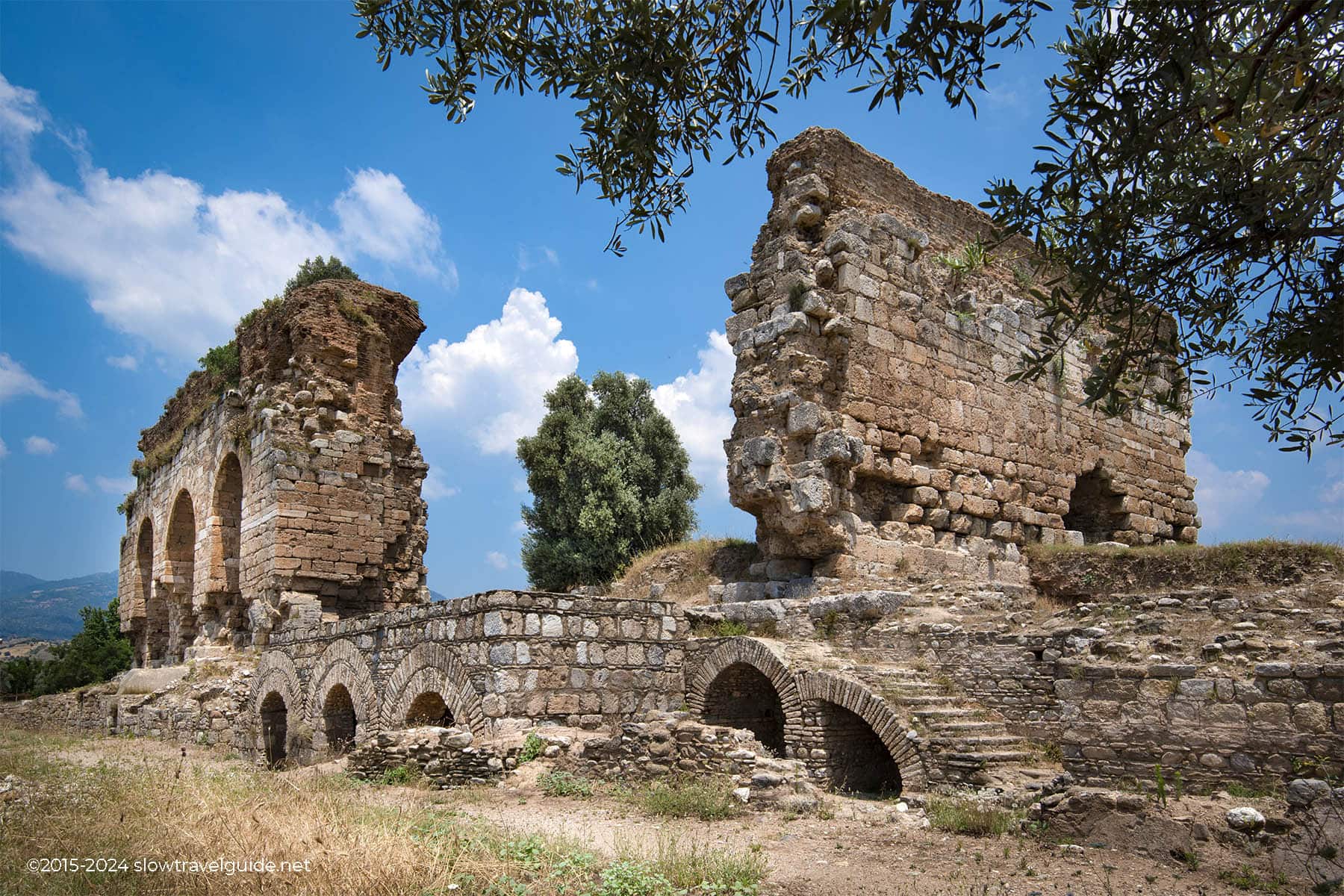
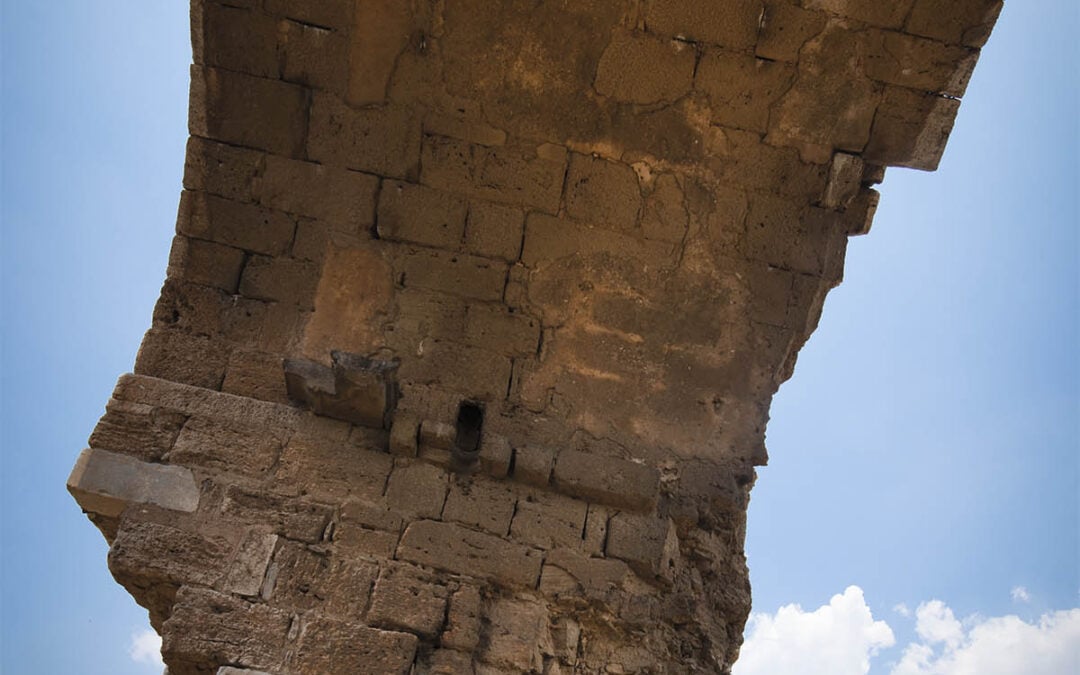
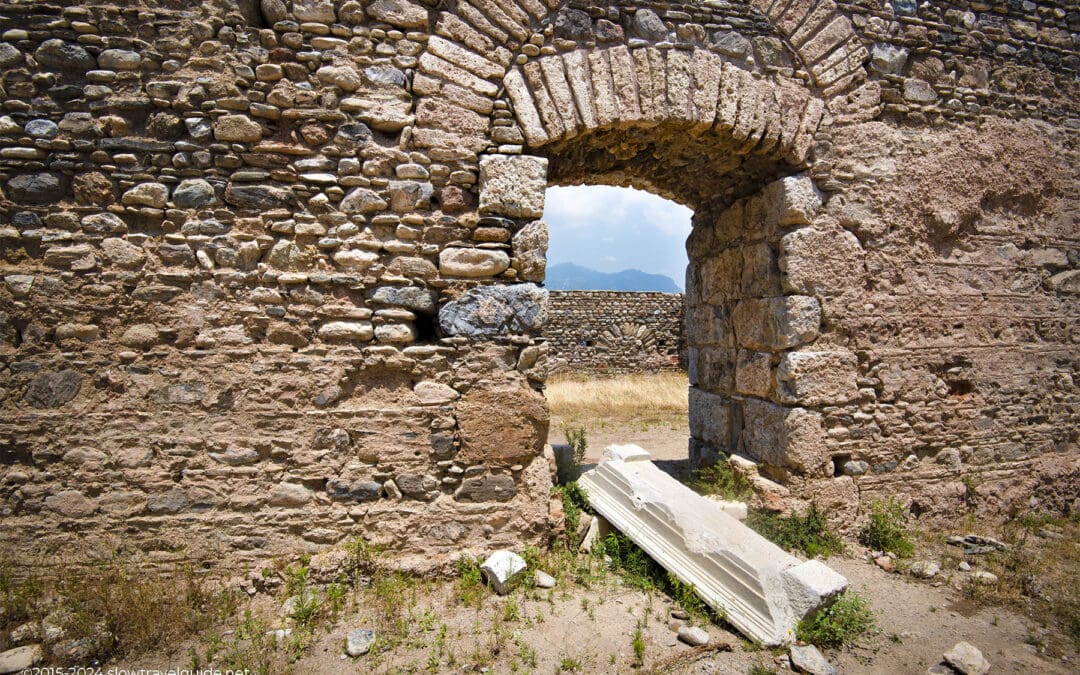
The Massive Gymnasium And Bath Complex Wall Seen From The Back Side
THE HISTORY OF TRALLEIS
There are different versions of Tralleis’ past, as there are with many other ancient places. Nonetheless, it is widely accepted that Carians inhabited the region before Argostians and mythological Tralleissians were barbarians who founded Tralleis. Tralleis, also spelt Tralles, was taken by Alexander in 334 BC and later by a succession of Hellenistic Kingdom rulers.
Tralleis, then ruled by Pergamon, rose to prominence as a sculpting centre. The two most well-known artists were Apollonio and Tauriskos. In the latter part of the first century BC, it eventually became the social hub for the wealthy and sophisticated.
You Can See Tralleis And Aydın Below, From Where The Theatre Was.
Under the reign of Emperor Augustus, the Gymnasium and Bath Complex at Tralleis was constructed in the ensuing century, in the second century AD. Currently, this is the most impressive ruin of the ancient site. Following the Turks’ conquest at the end of the 13th century, residents began to leave the city, which suffered from a lack of water and irreversible seismic damage.
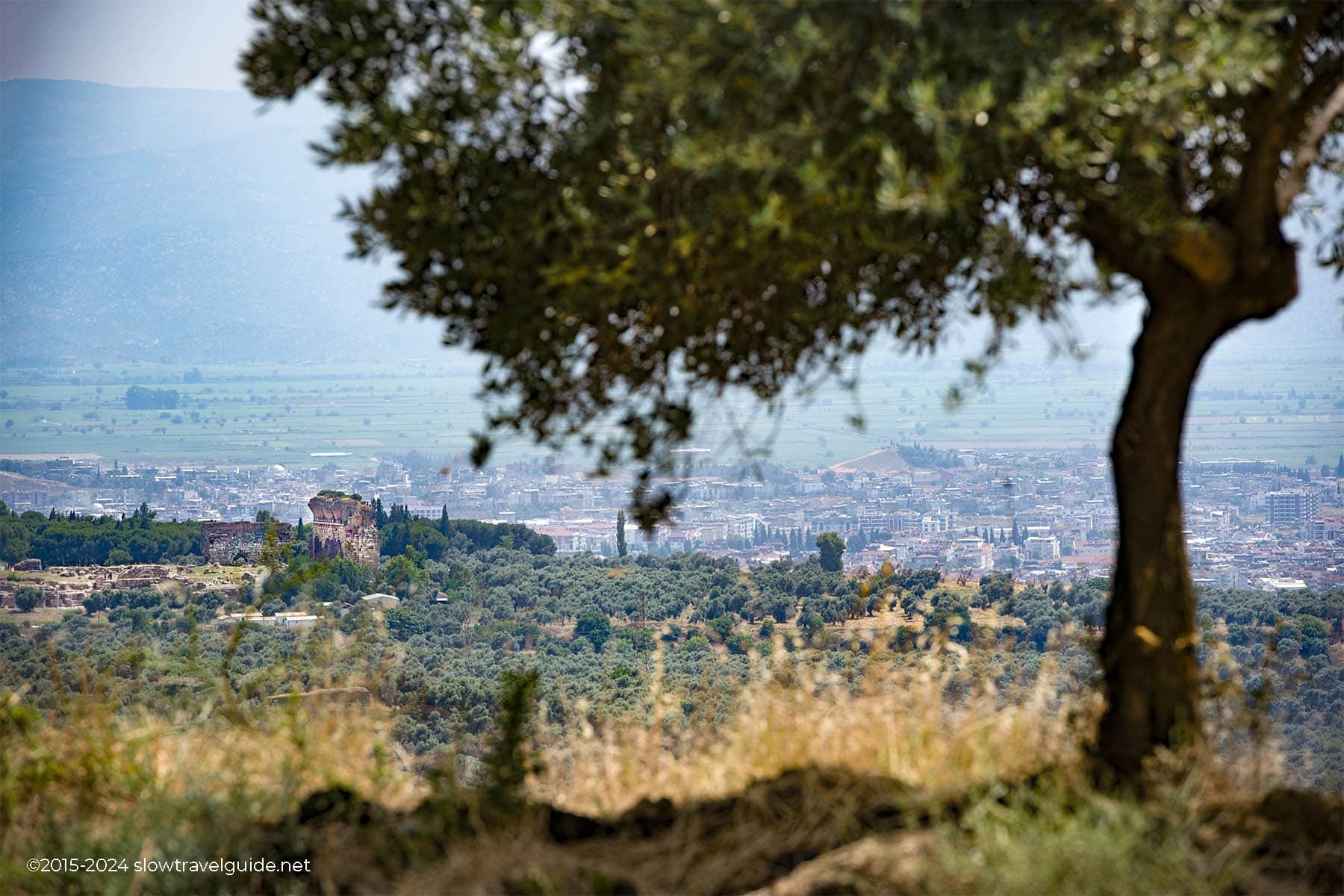
From Where The Theatre Was, You Have A Good View Of Tralleis And Aydın Below
Under the reign of Emperor Augustus, the Gymnasium and Bath Complex at Tralleis was constructed in the ensuing century, in the second century AD. Currently, this is the most impressive ruin of the ancient site. Following the Turks’ conquest at the end of the 13th century, residents began to leave the city, which suffered from a lack of water and irreversible seismic damage.
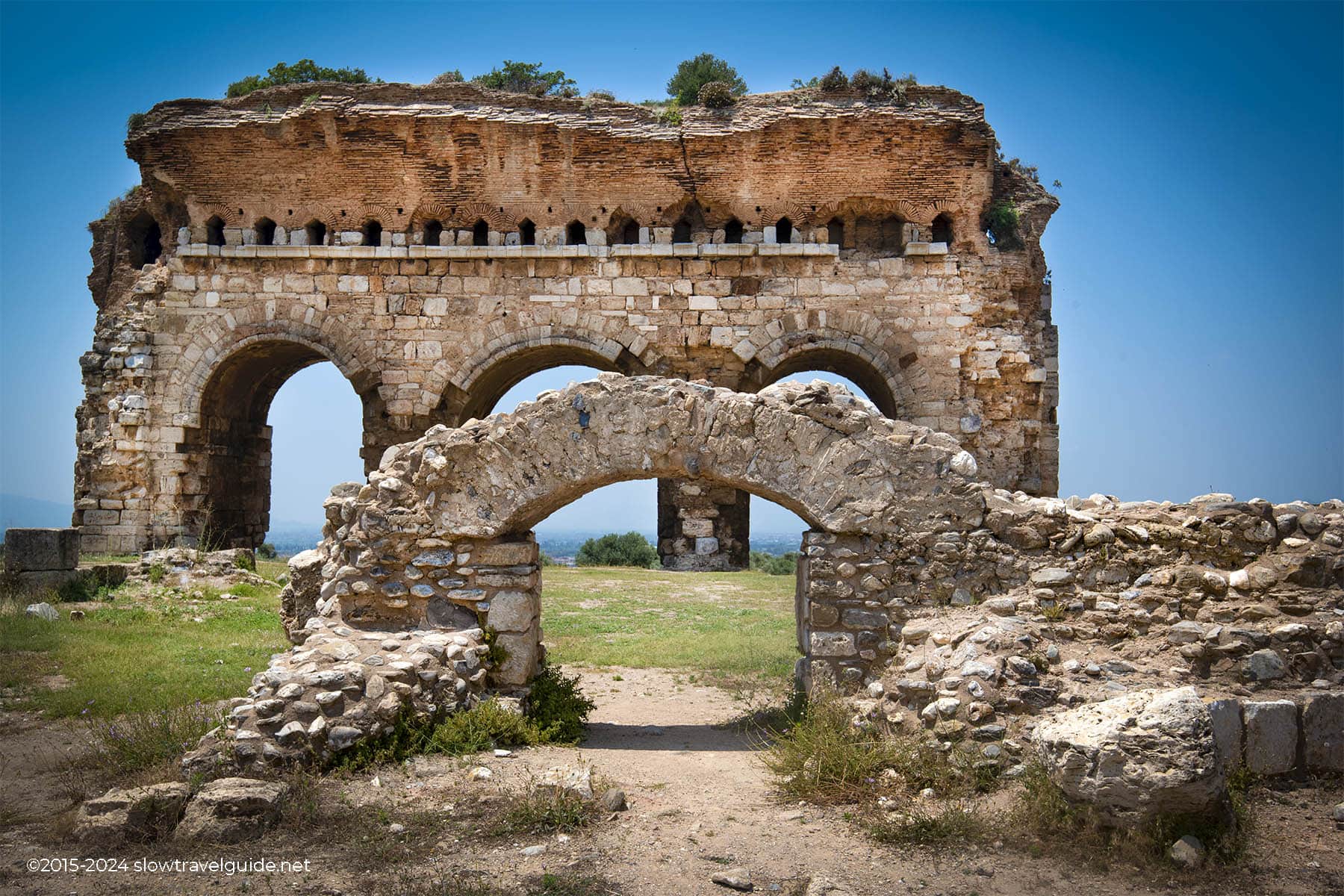
THE GYMNASIUM & BATH COMPLEX
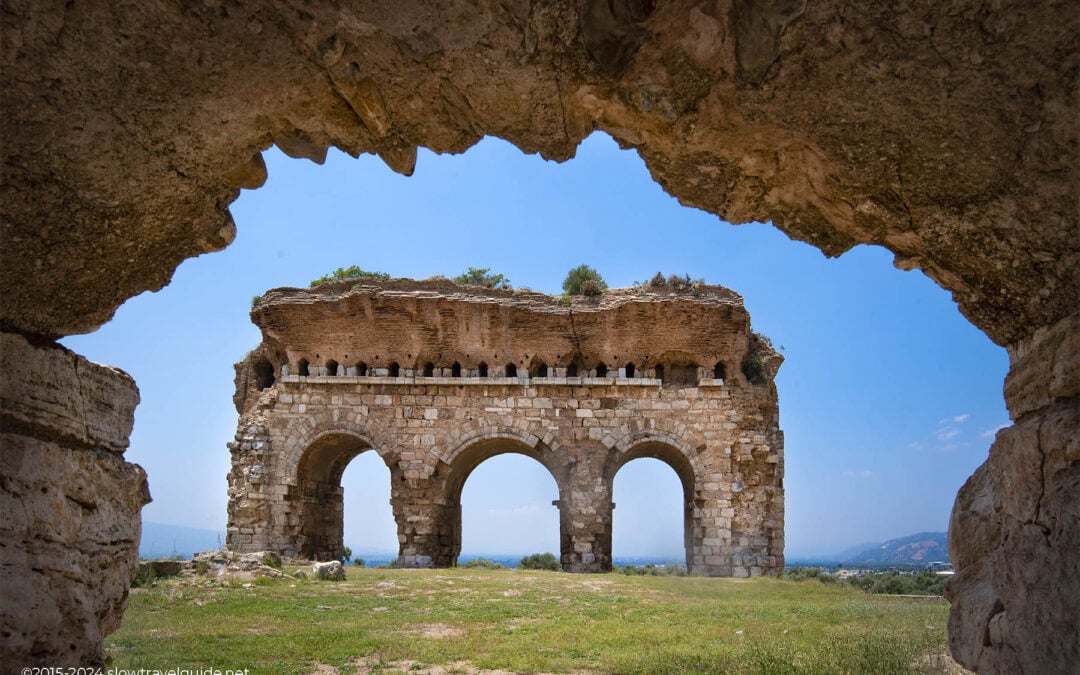
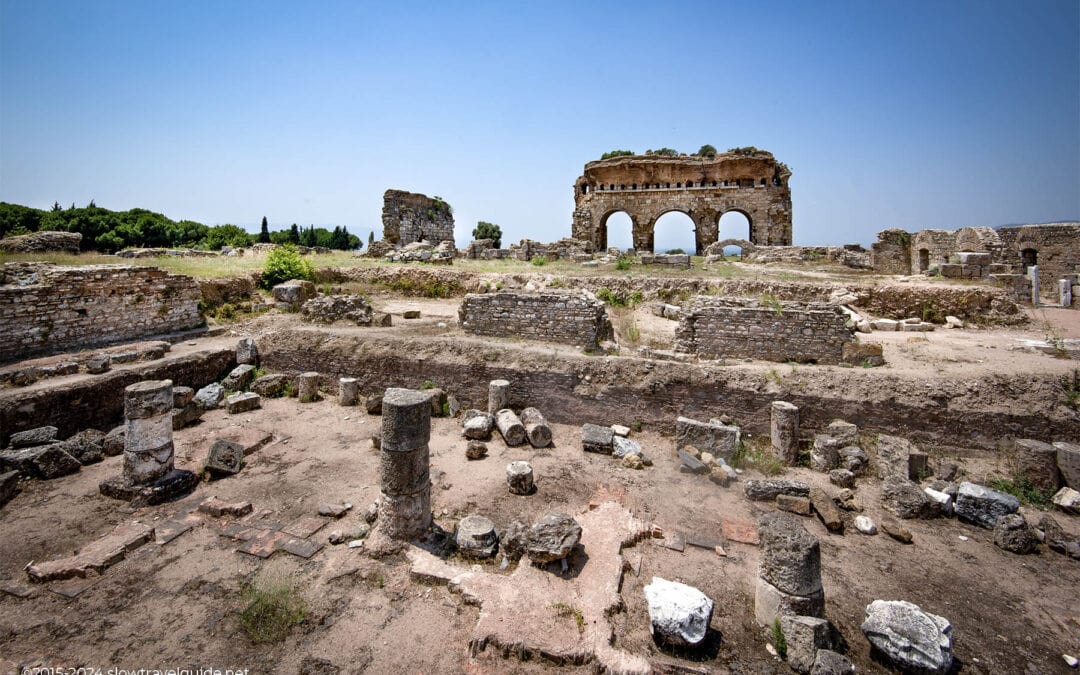
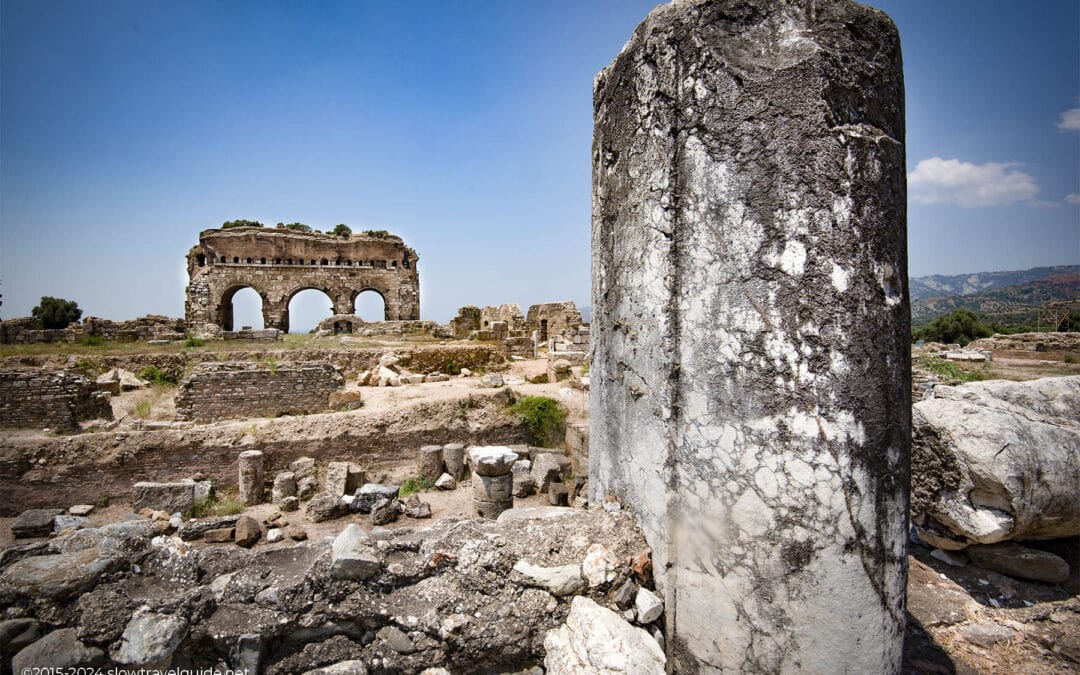
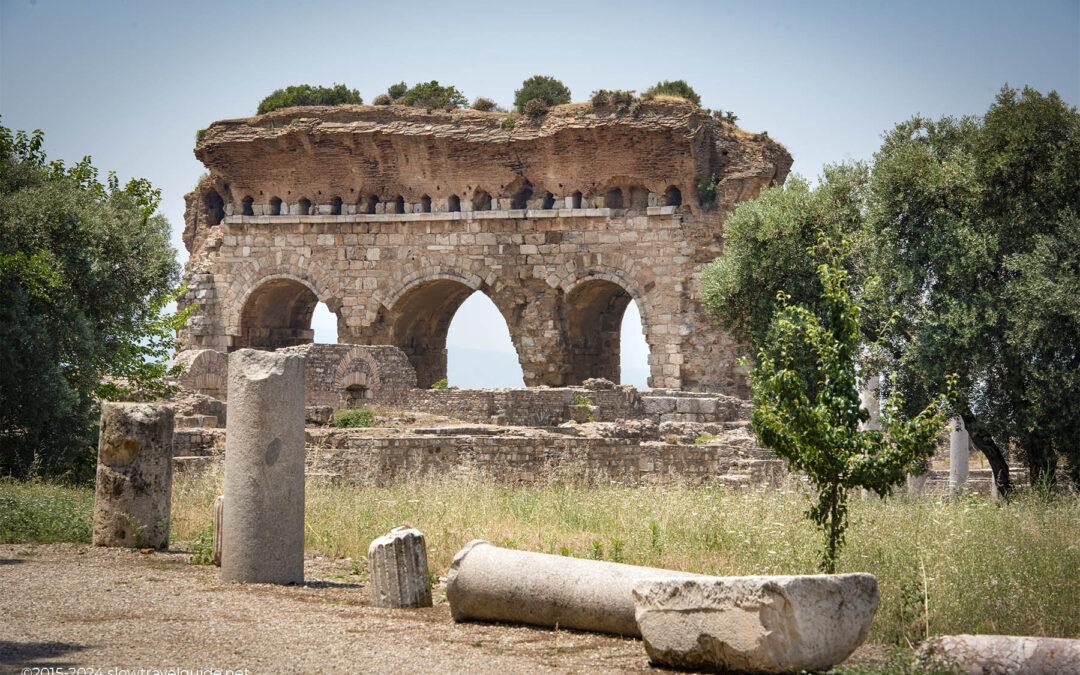
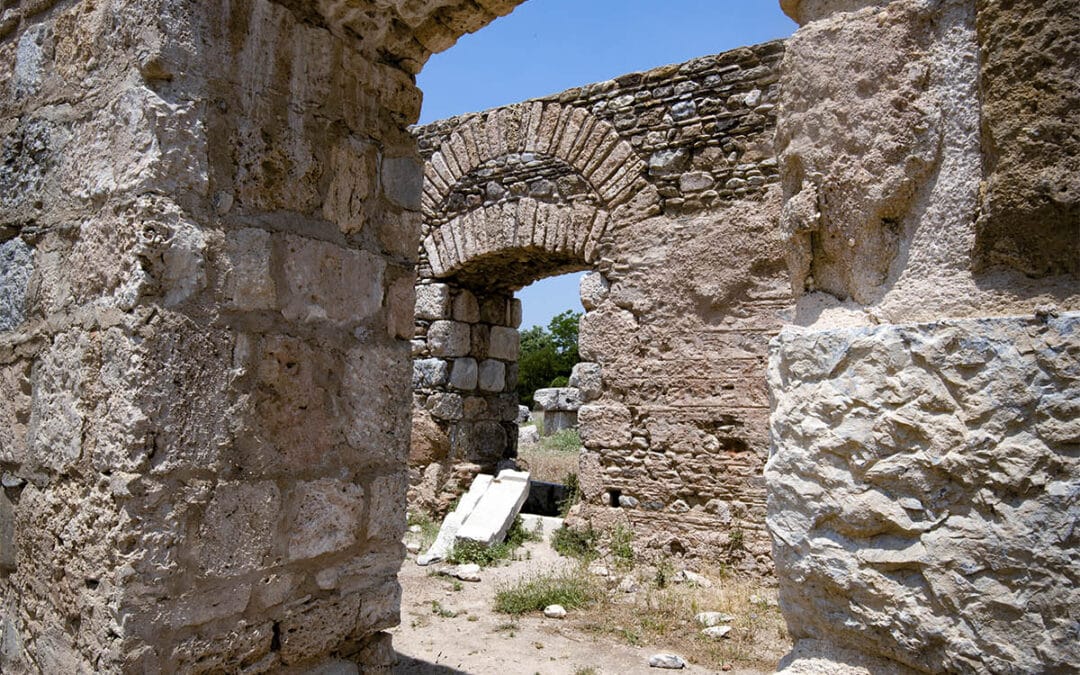
If you were aware of Tralleis prior to reading this post, it was most likely because to a picture you saw taken from one of the Gymnasium & Bath Complex’s still-standing walls. The name “Üçgözler,” which means “three eyes” in the local language, refers to the enormous wall with three arches. One of the biggest gymnasiums in Anatolia, the Tralleis Gymnasium was frequently rebuilt after being severely damaged by earthquakes. The only remaining portion of the Bath part is its western wall, which is now a well-liked location for selfies among both locals and visitors.
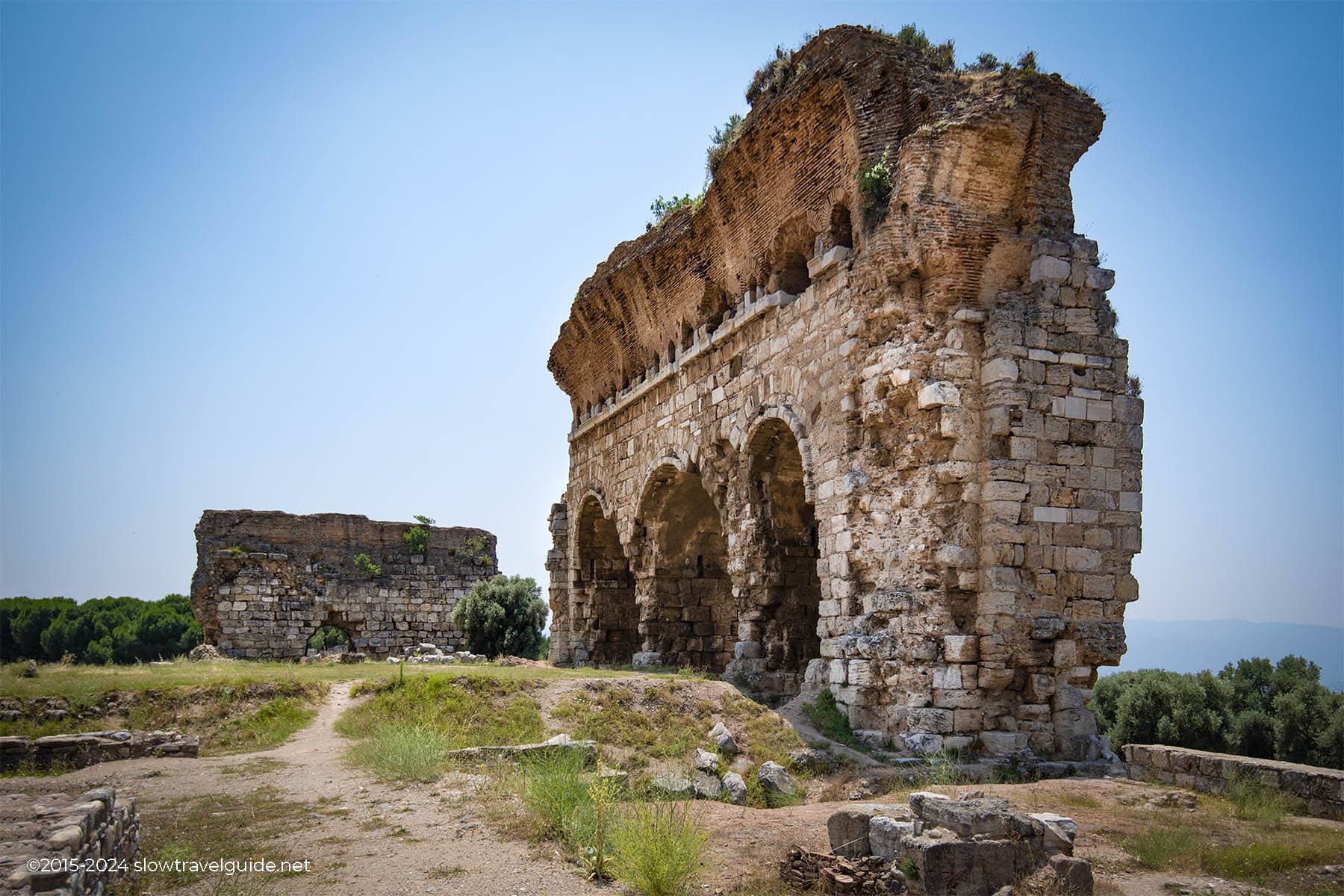
The Gymnasium And Bath Wall Is The Top Selfie Spot At Tralleis
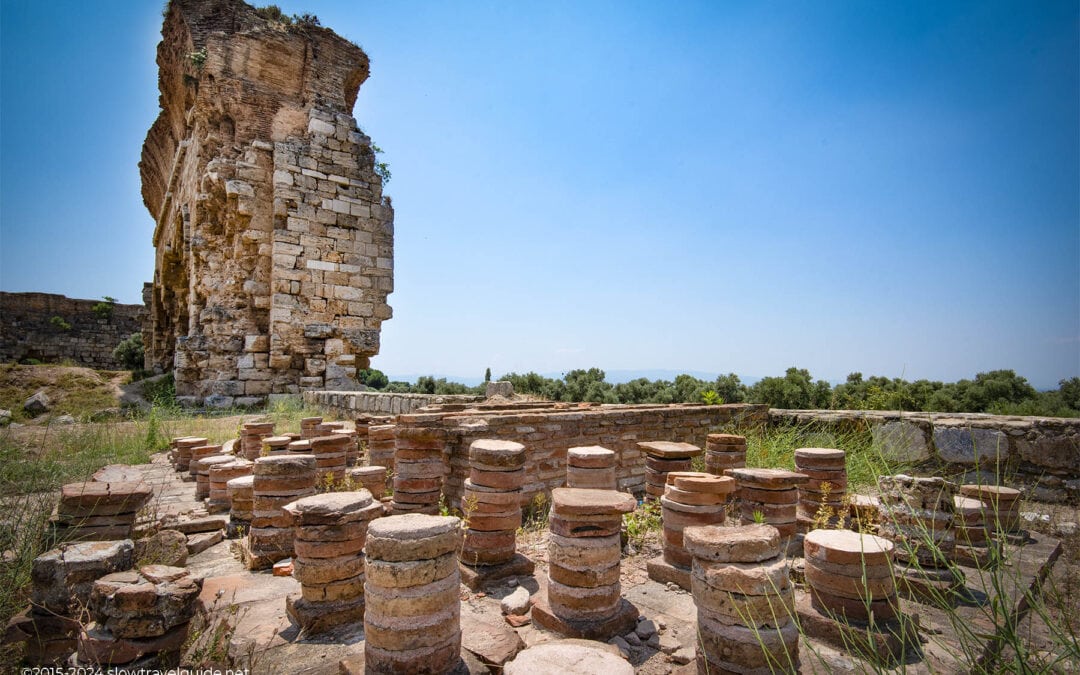
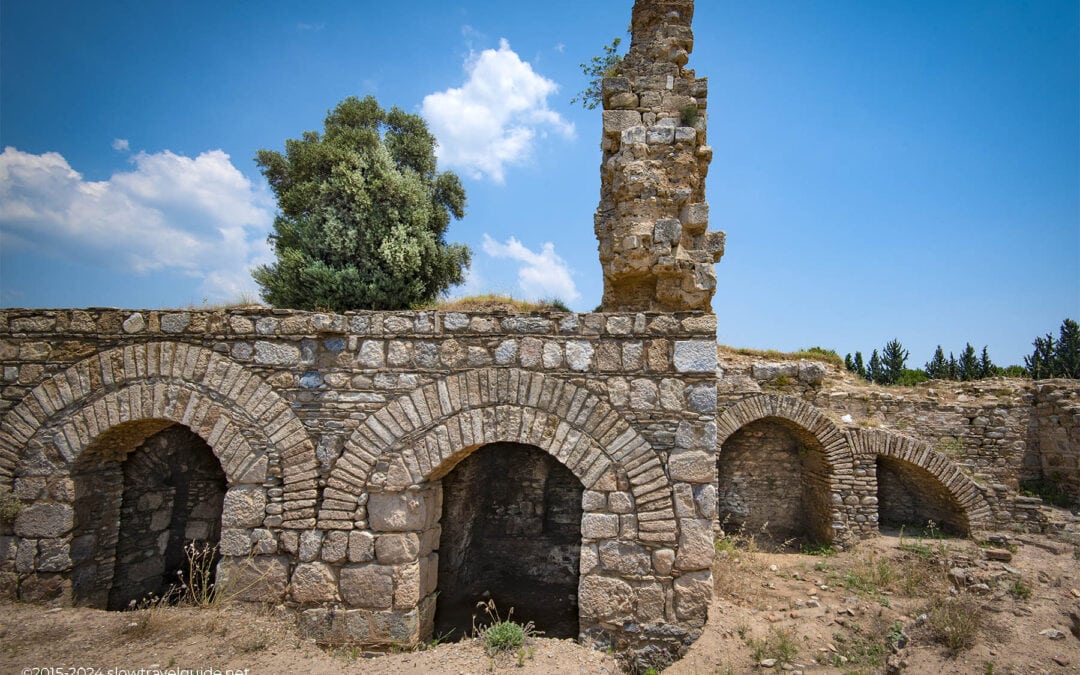
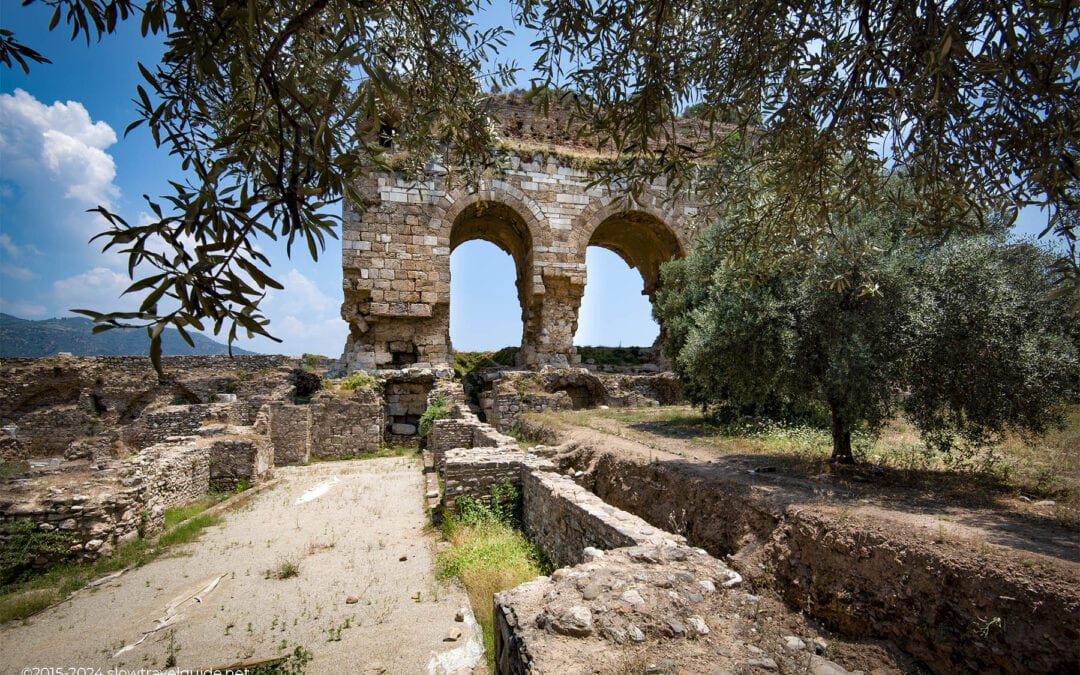
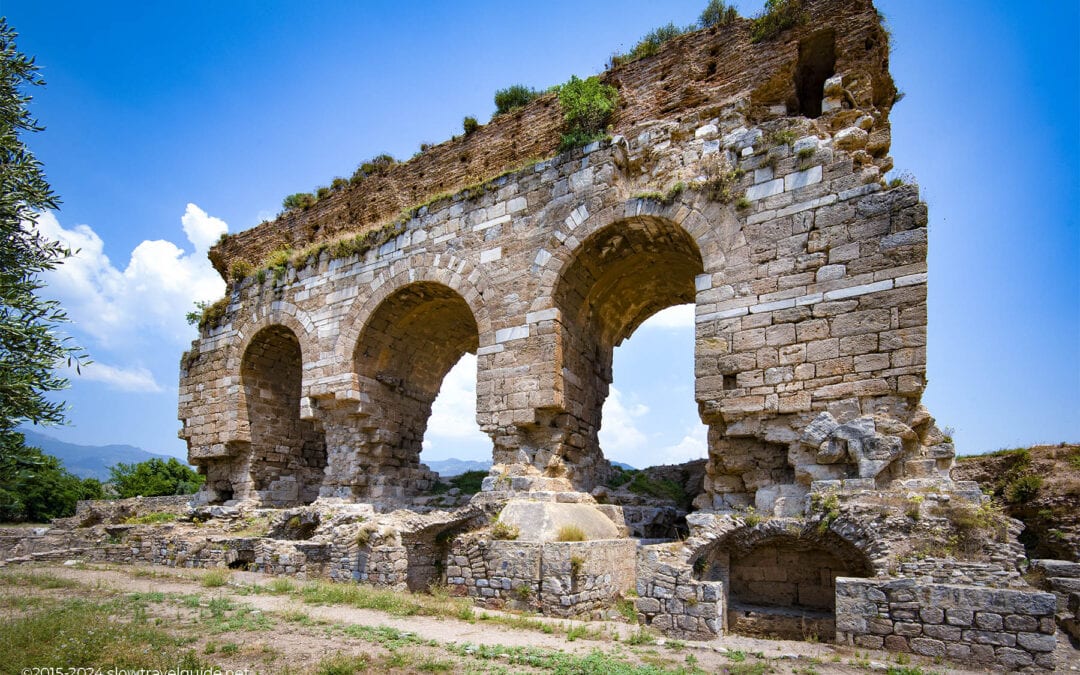
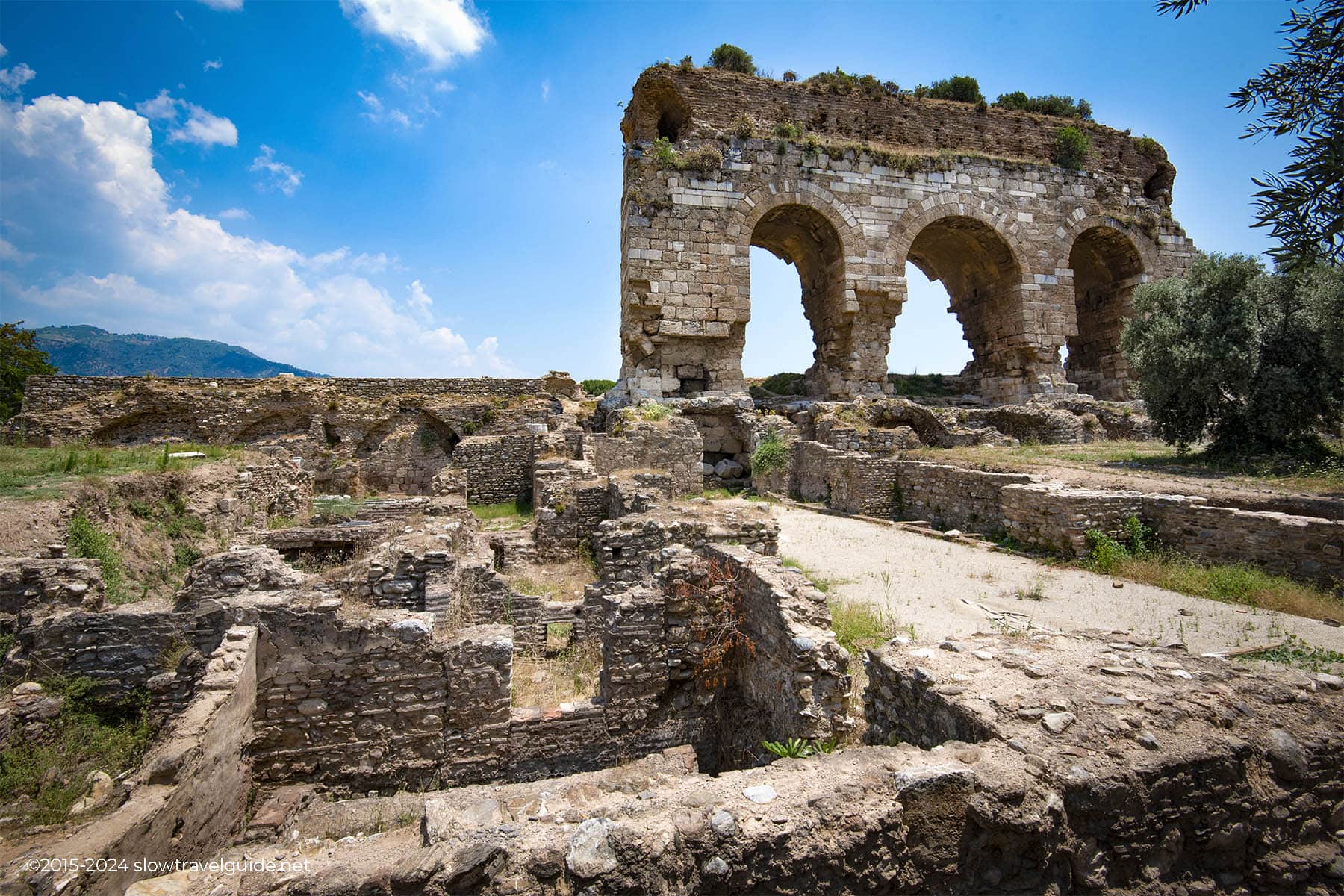
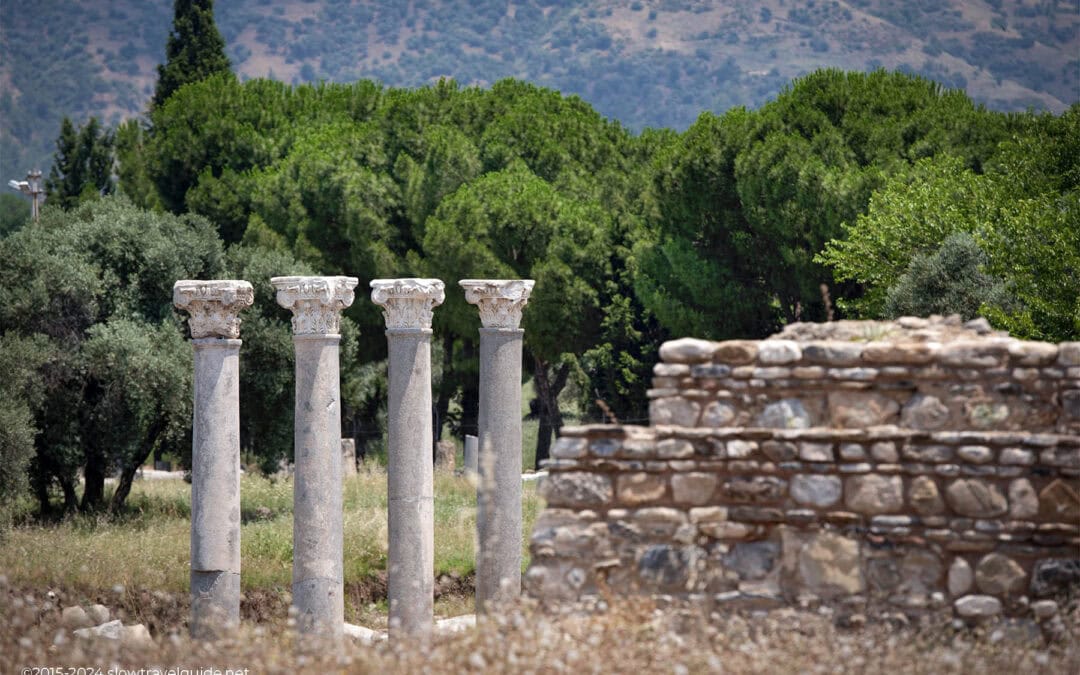
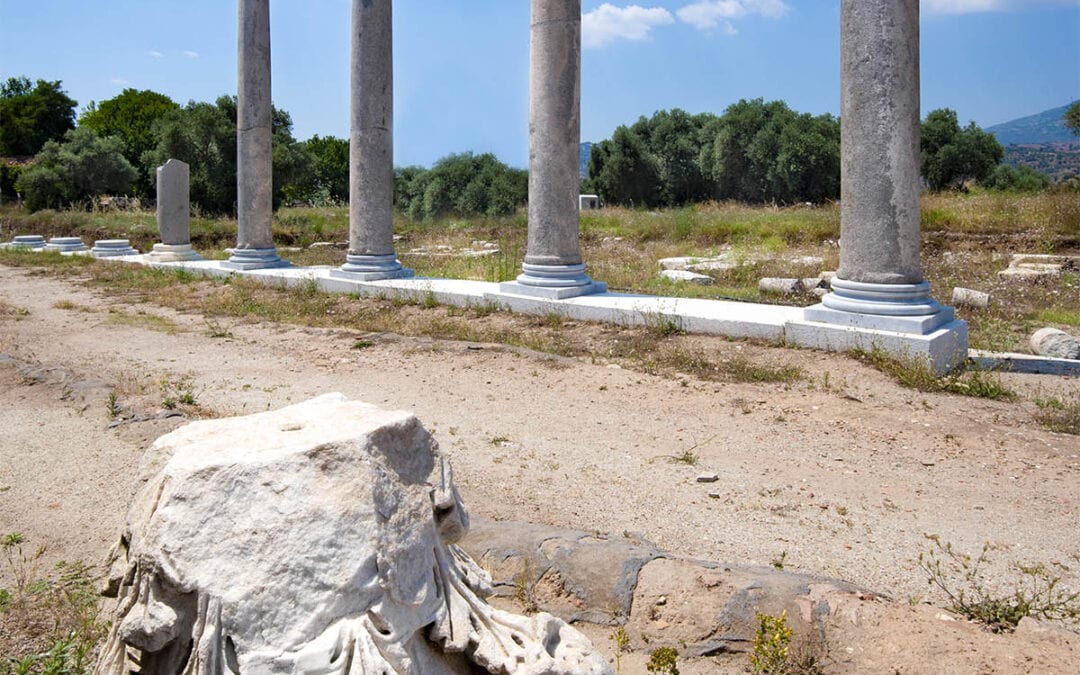
The entire facility must to have been remarkable. After passing the latrines and entering through a propylon (similar to the one at Aphrodisias), visitors came to the Palaestra and the Imperial Hall, which had an open swimming pool behind it. The columns inside the Palaestra have been partially excavated, and the latrines have undergone partial restoration, although not many of these structures are still visible today. On either side of the swimming pool were fountain-equipped changing rooms.
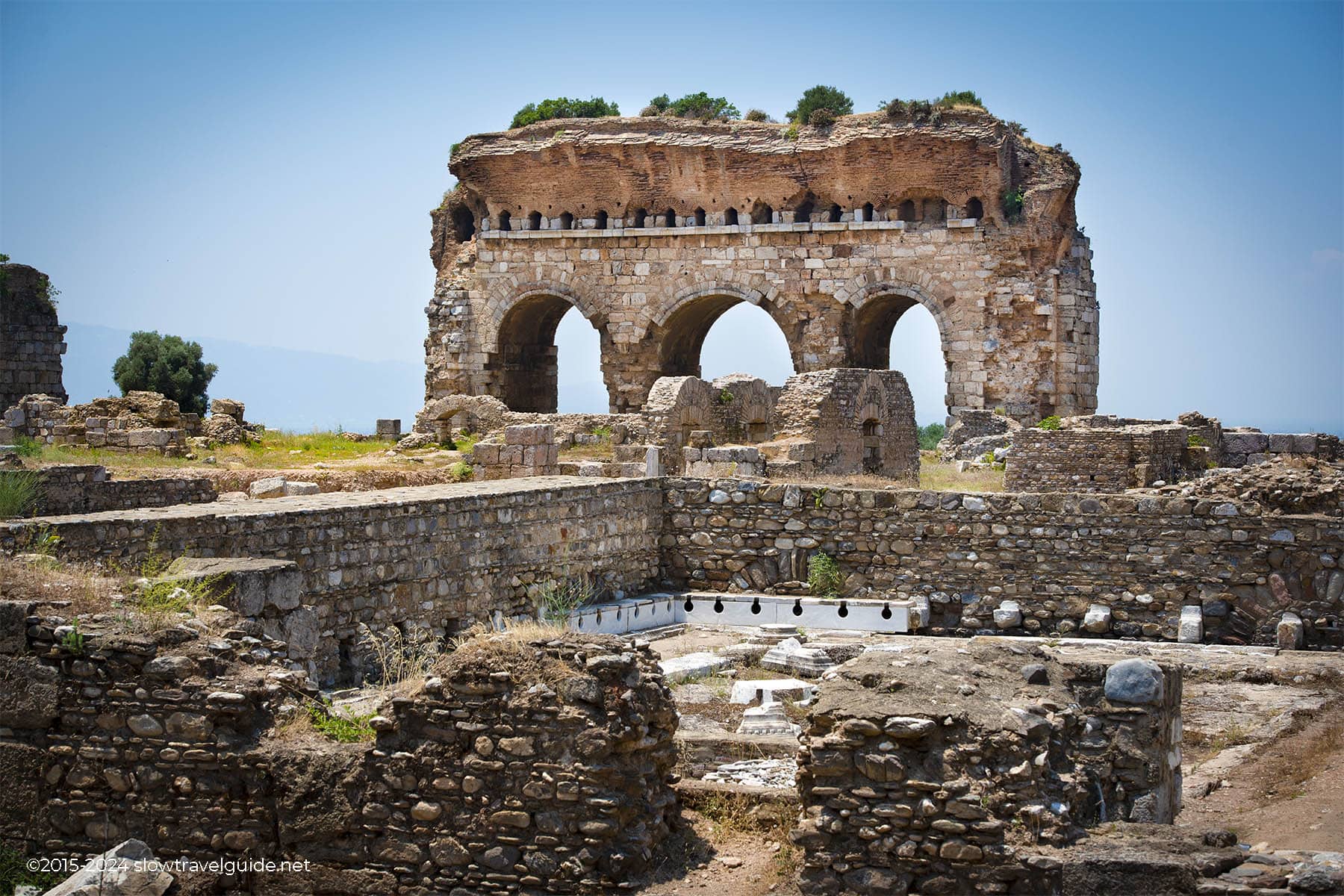
A STROLL THROUGH TRALLEIS
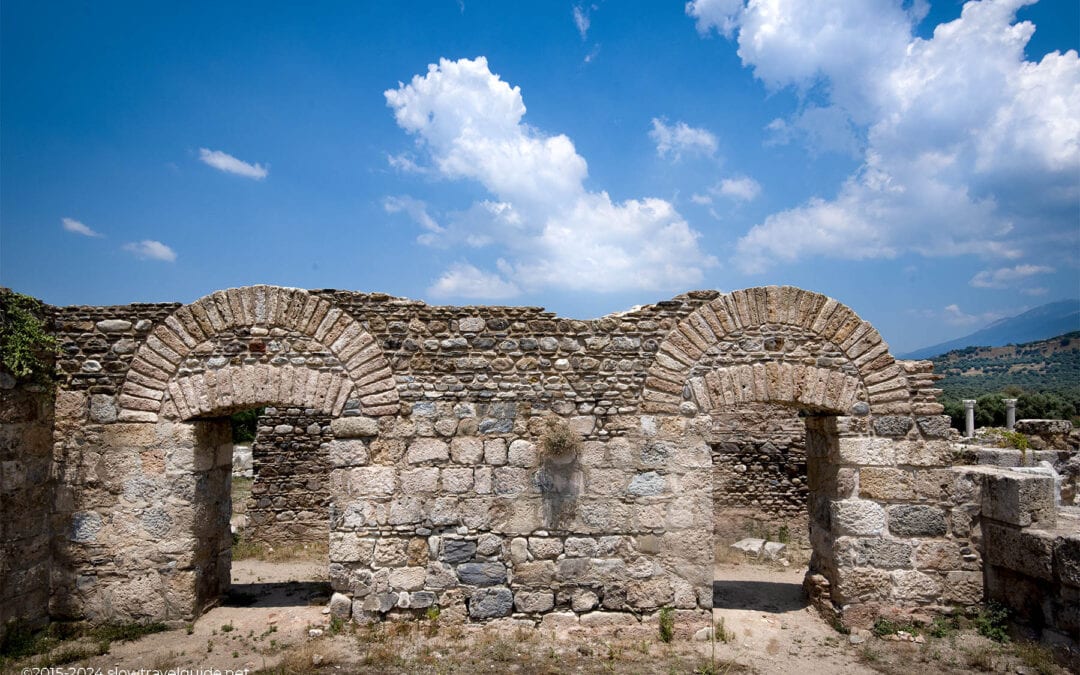
Once you’ve recovered from your admiration of Üçgözler and the Bath and Gymnasium ruins, a stroll around Tralleis will lead you past the remnants of the Roman Housing area and into the Episcopal Building, which is located at the back of the Gymnasium. This last one has an amazing perspective over Aydın, which in the past is said to have merely been a green valley.
There is a colonnaded street with stores that date back to the late Roman and early Byzantine eras next to the Gymnasium & Bath Complex. At approximately 50% of the almost 100-meter-long retail avenue are the remnants of a semi-circular water feature. It appears from artefacts found during excavations that glass was made in at least a few of the stores.
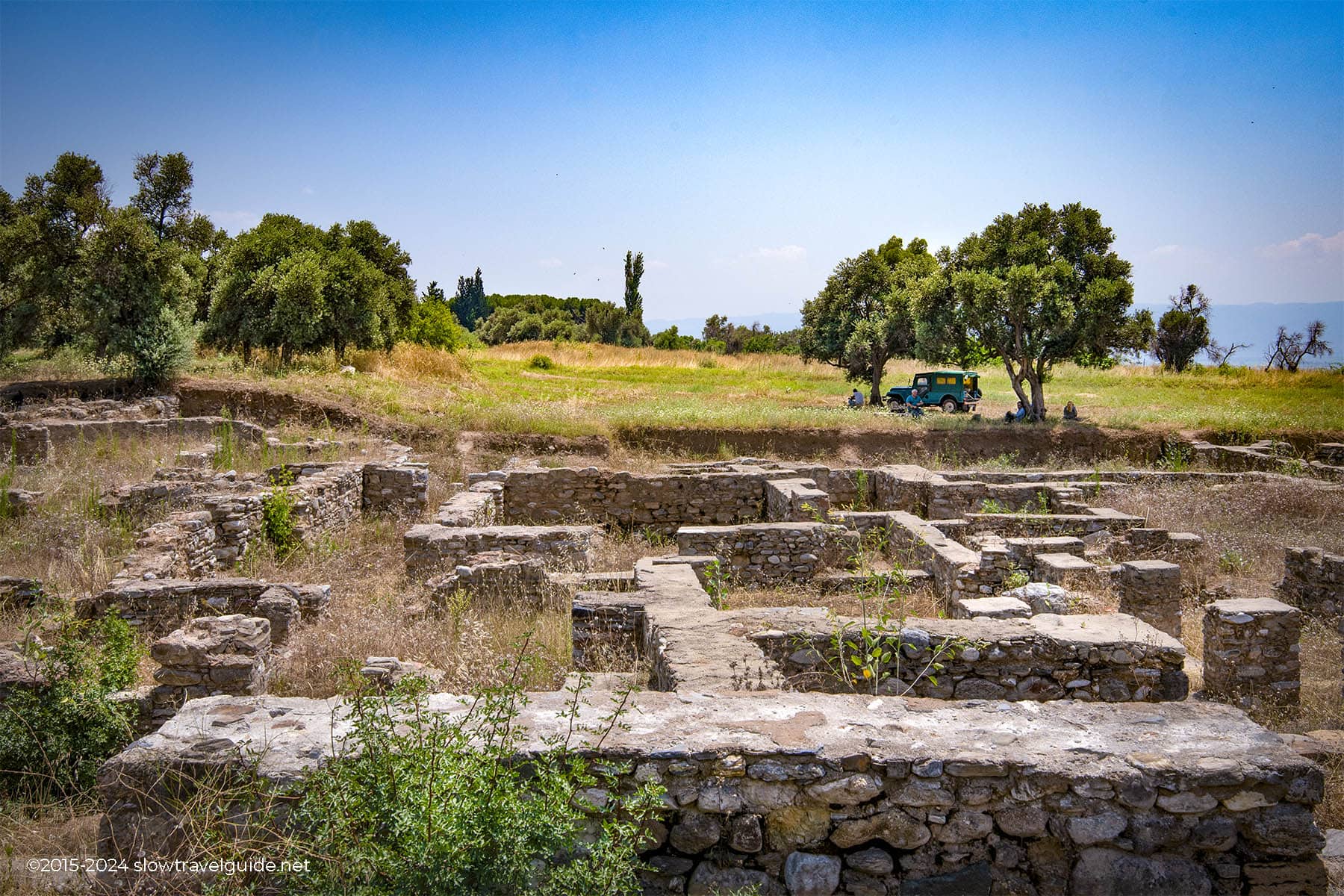
The Roman Housing Area At Tralleis
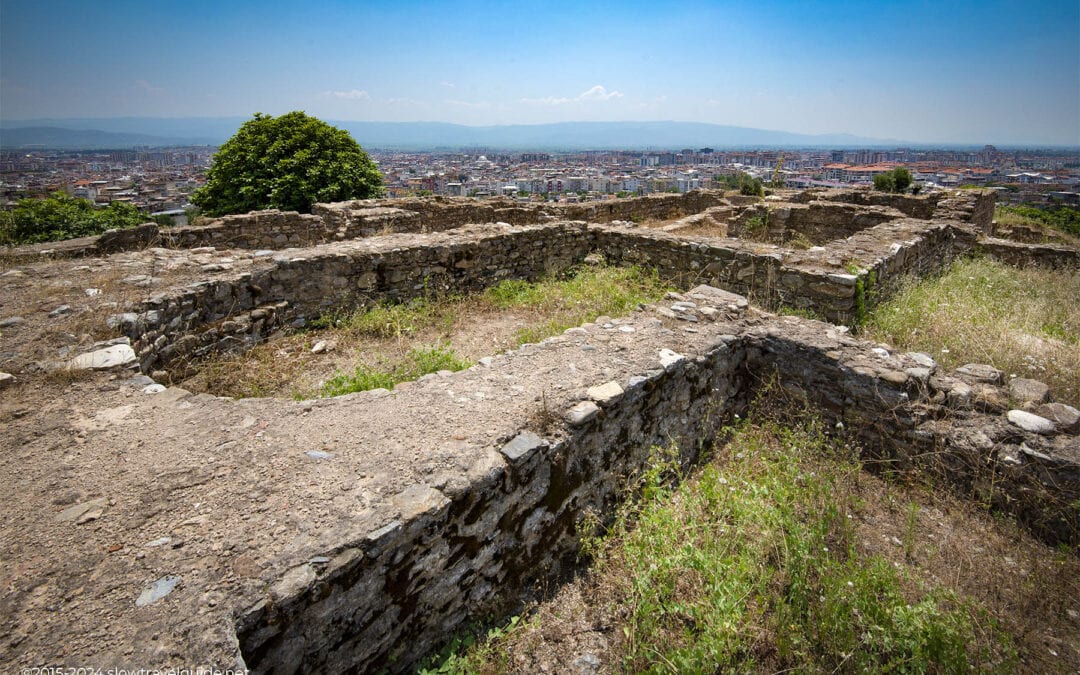
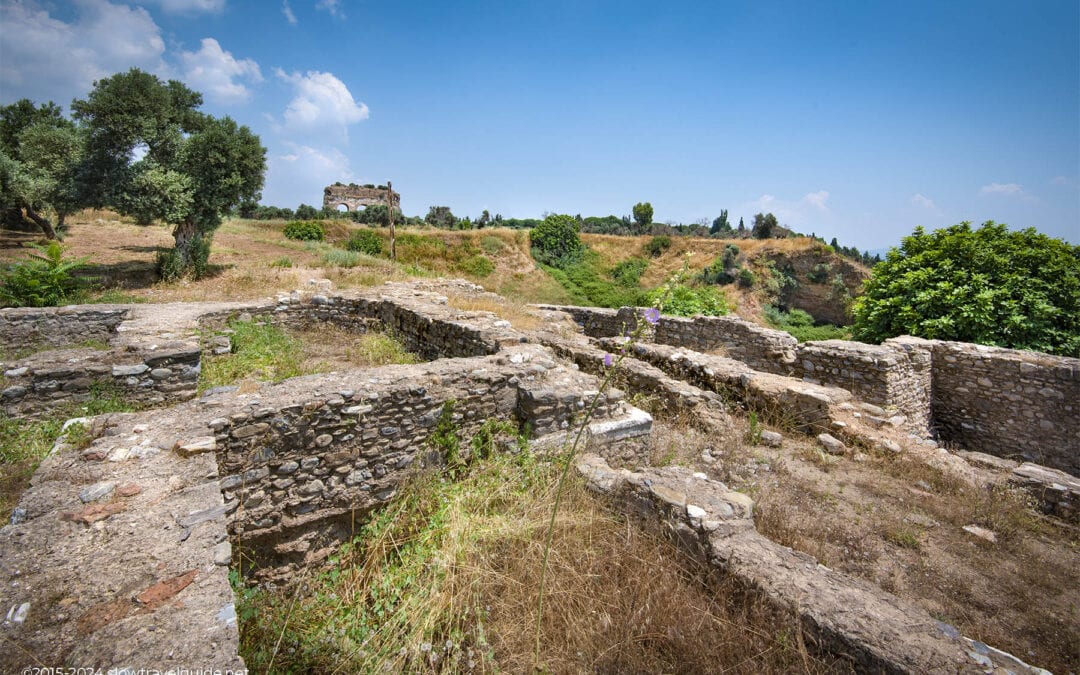
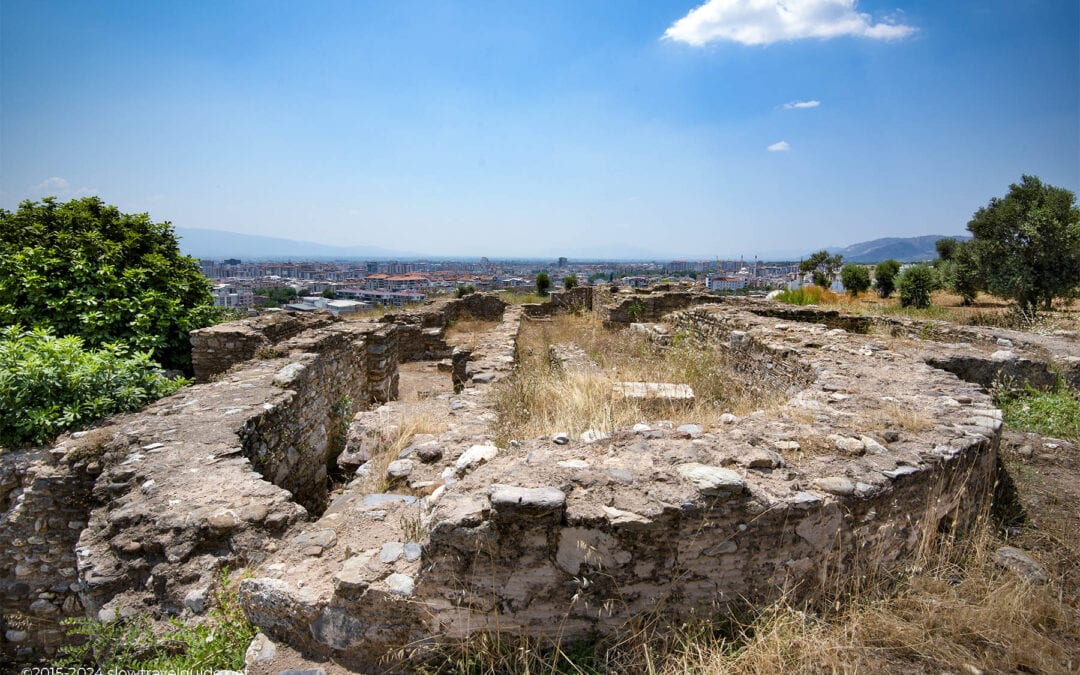
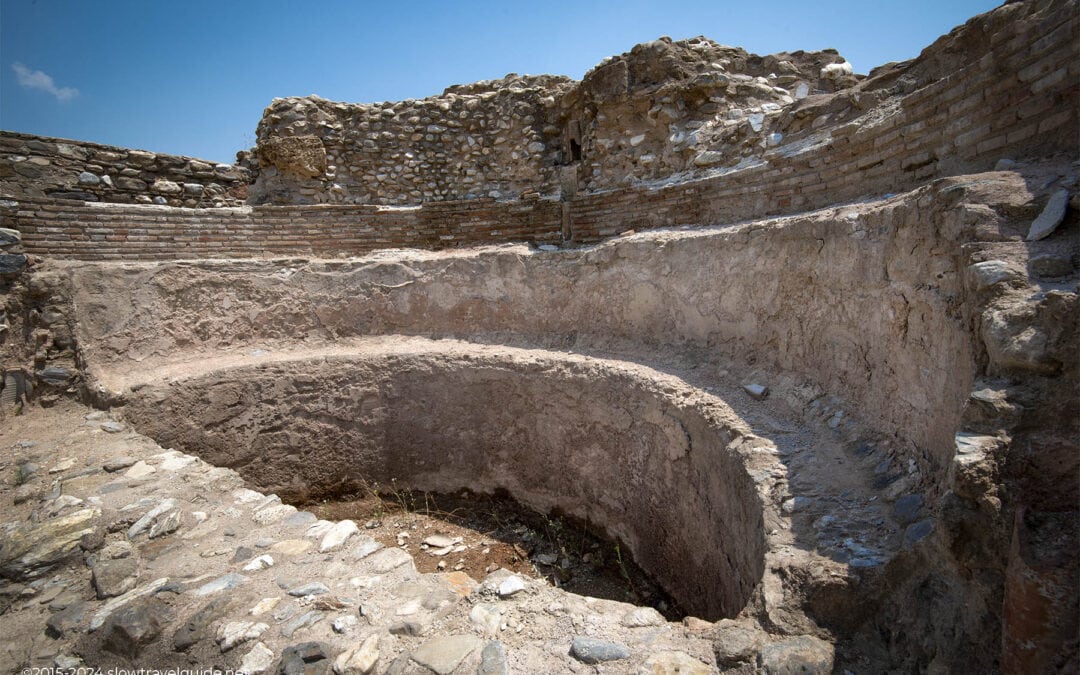
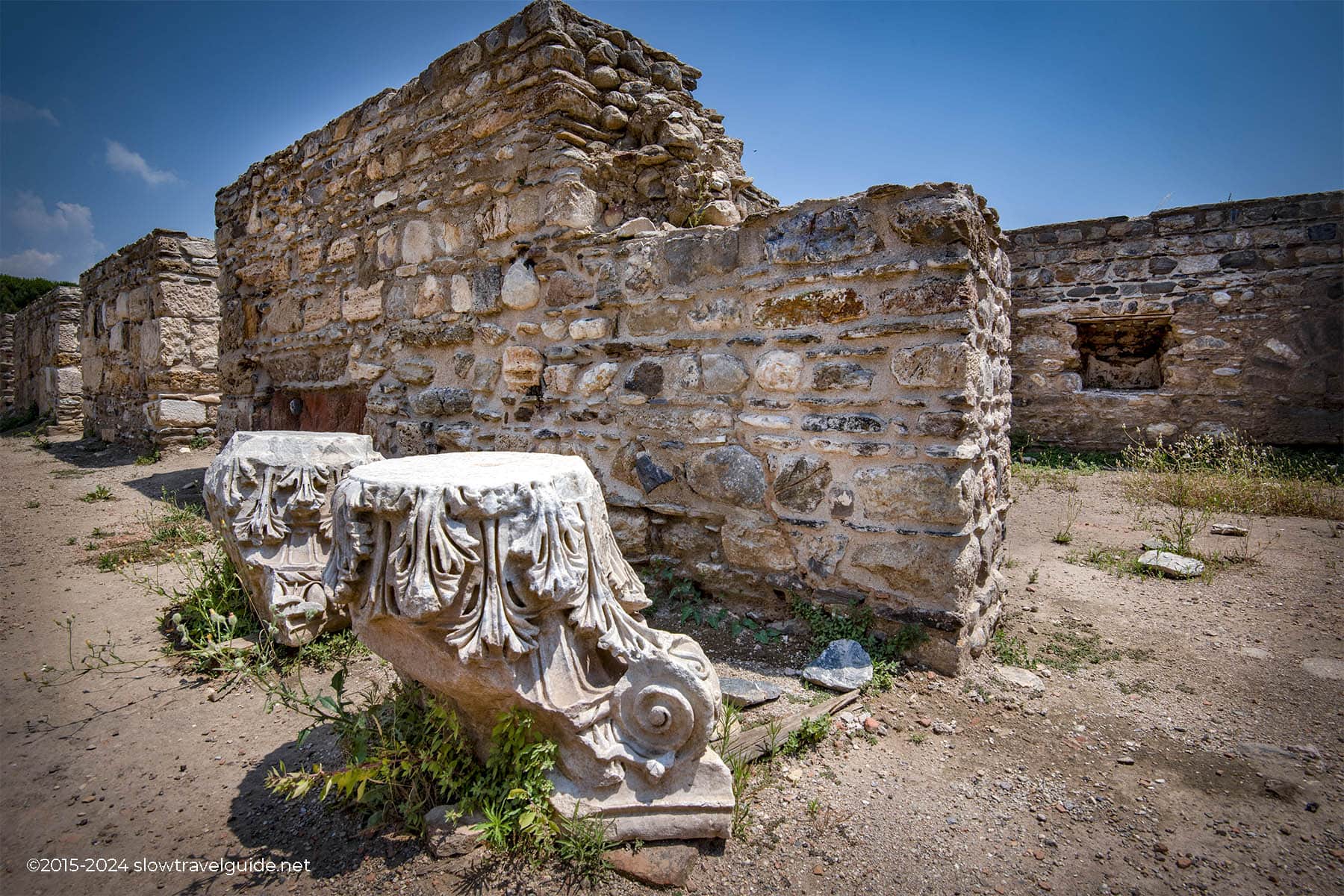
At The Back Of The Gerontikon
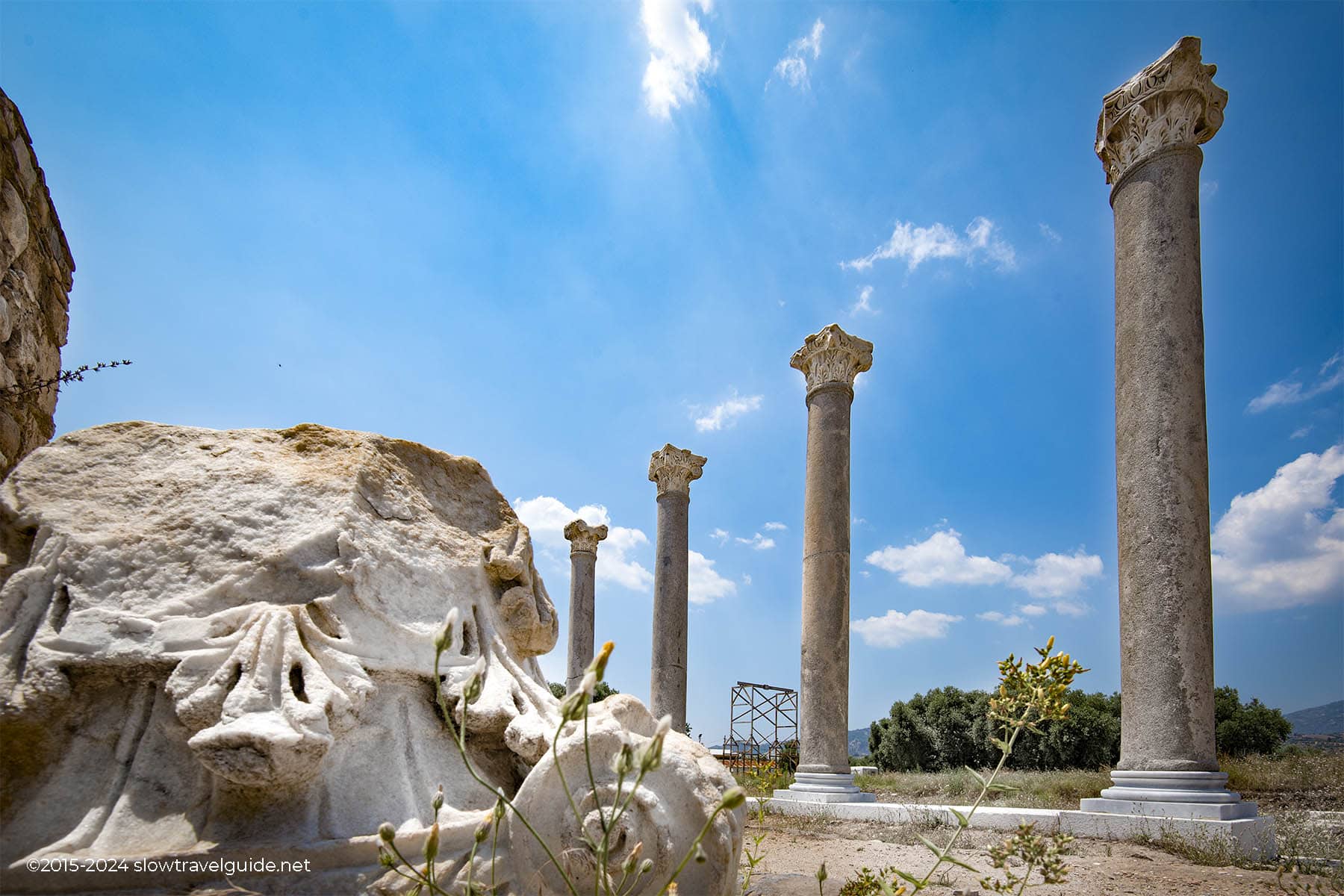
THE HIDDEN GEM OUTSIDE OF THE ANCIENT SITE
When you first arrive in Tralleis, a map of the location and city will be displayed on an information board. Don’t be misled by the map’s appearance of a stadium and a theatre; such buildings haven’t been unearthed yet. Do you recall our Magnesia post? Although the stadium was spectacular, a pre-excavation photo linked in the post demonstrates that not much could be found a few years ago. Nevertheless, the Arsenal is a sight worth viewing in addition to the actual historical site of Tralleis!
Not the football team, but a real military garrison maze connected to the city through covert tunnels and passageways. This 2,500-year-old building is located across the street from the location. Turn right on the main road as you leave Tralleis, and nearly immediately after, seek for a small dirt road on your left. That’s the location of this intriguing structure. Sadly, despite a 2.5-kilometer subterranean passage being ready for visitors in 2002, the location is no longer reachable because of a treasure hunter invasion after it was made public.
To sum up, if you’re ever in the Aydın region, you should definitely check out Tralleis. Free admission is offered, and this is a lovely place to explore—especially for those who have visited the majority of Turkey’s must-see locations.
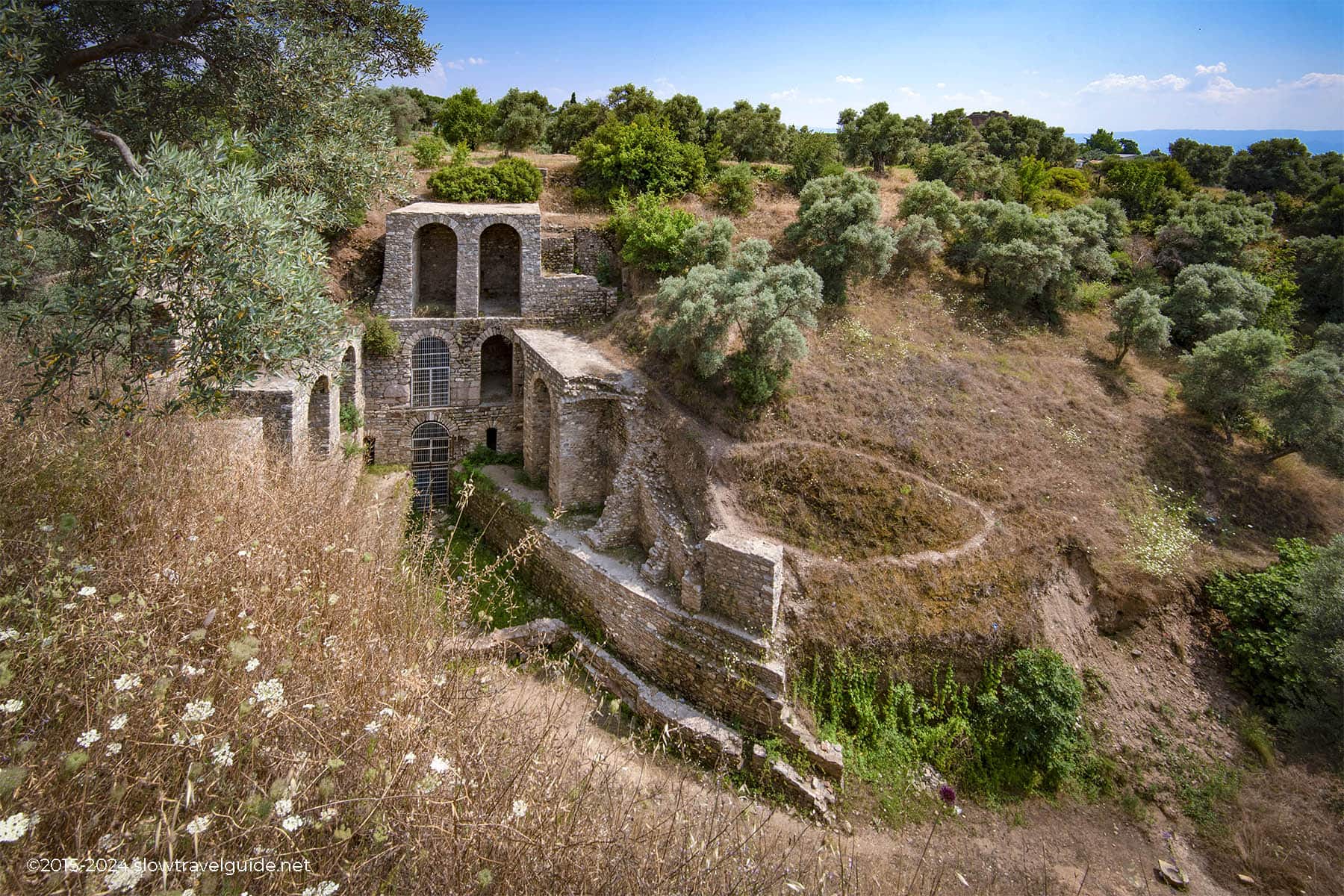
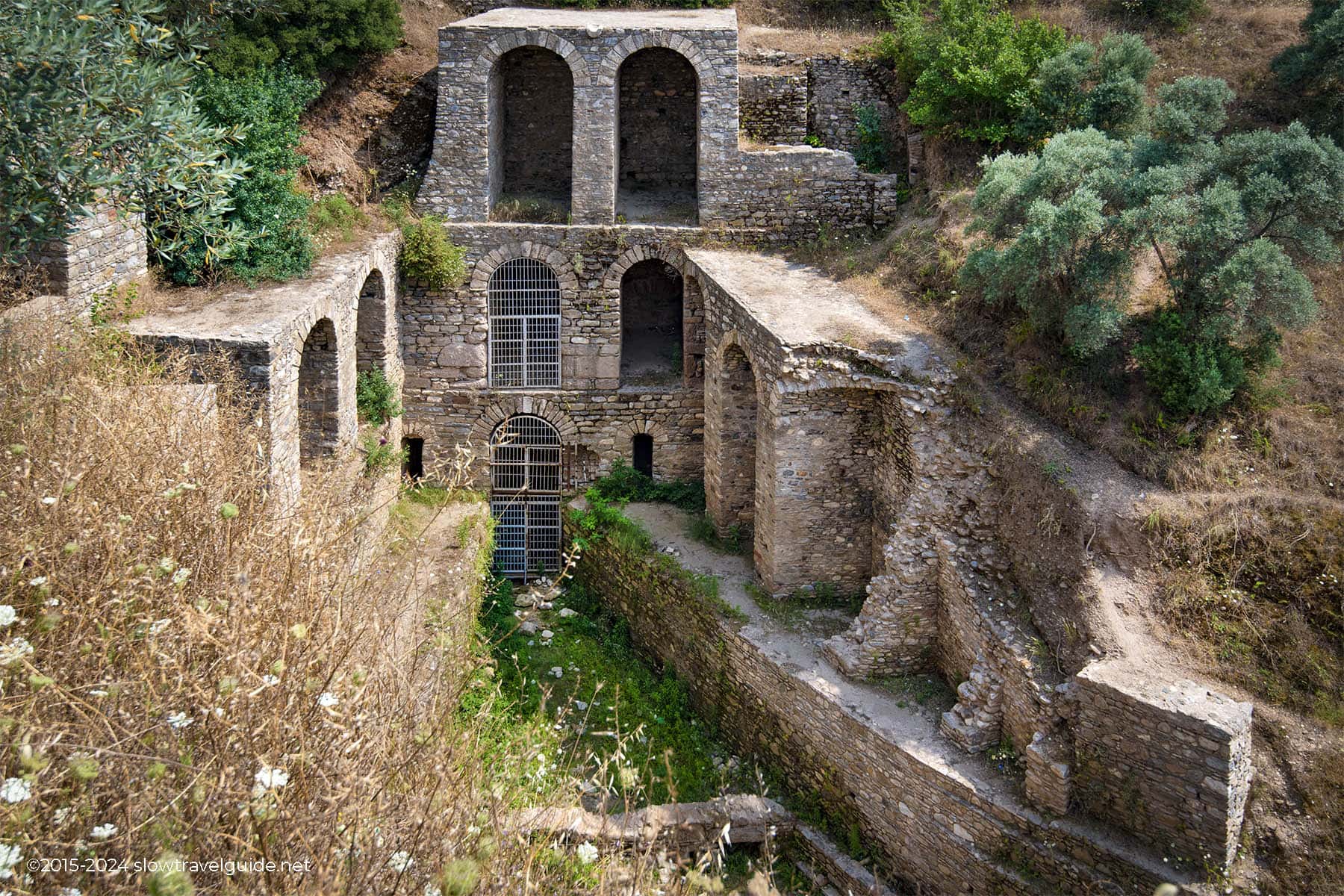
Well Hidden Arsenal With Tunnels To The City
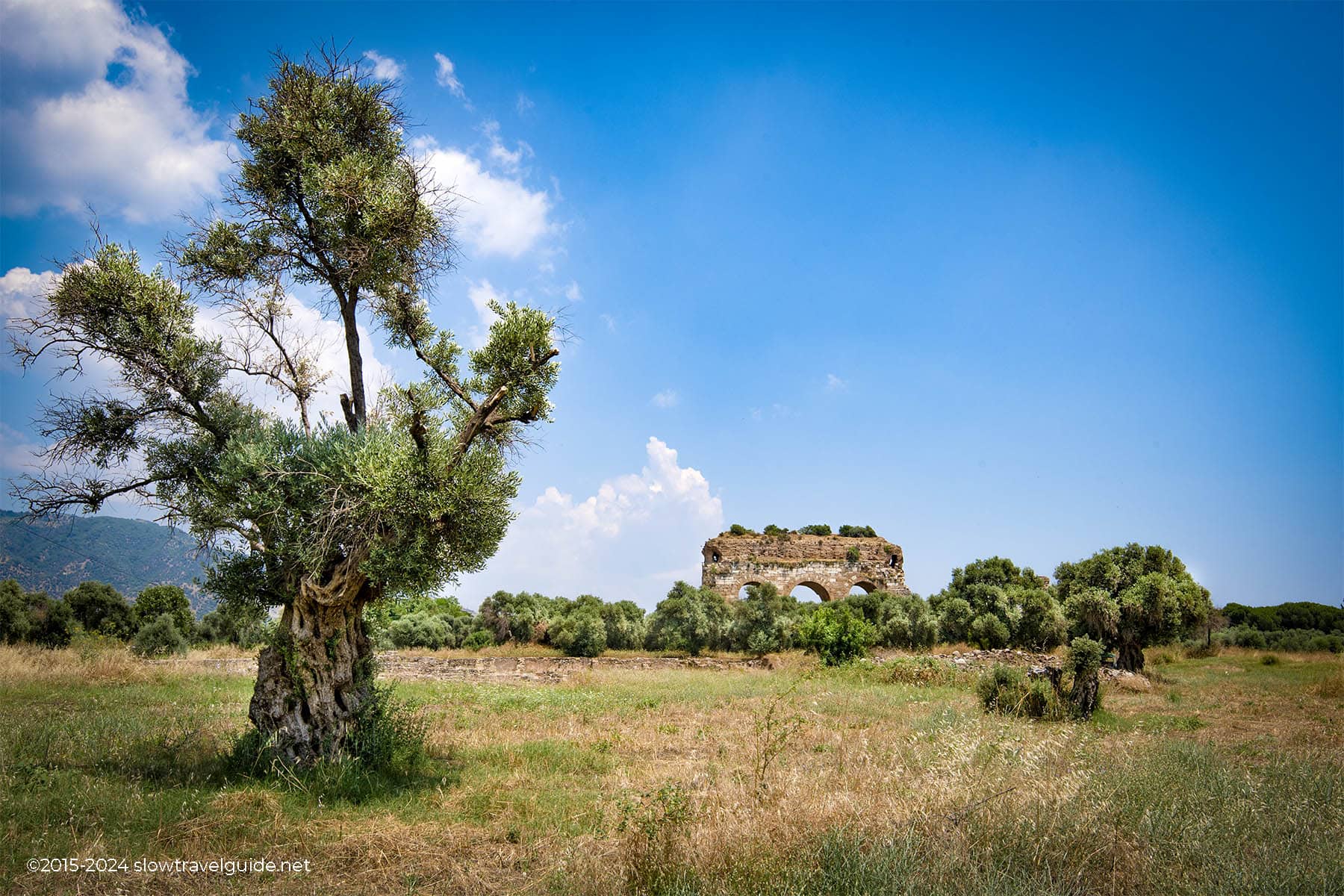
A Serene Feeling At Tralleis
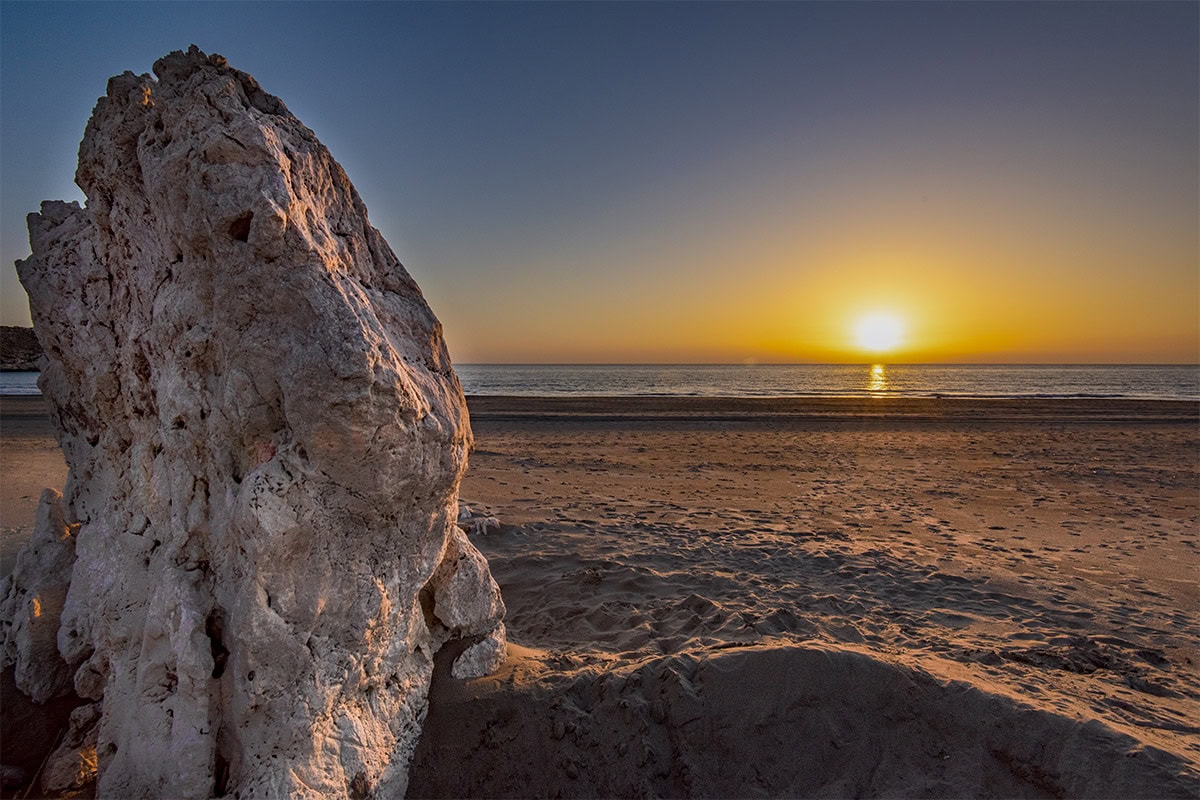
Patara
Patara is the longest beach in Turkey. You can walk up to 12 kilometres along this sandy beach, with beautiful dunes in the background. Patara Beach is a pleasure for those who like to walk or ride on the shore and sunbathers and swimmers looking for a natural beach, even in the high season. (Read more)
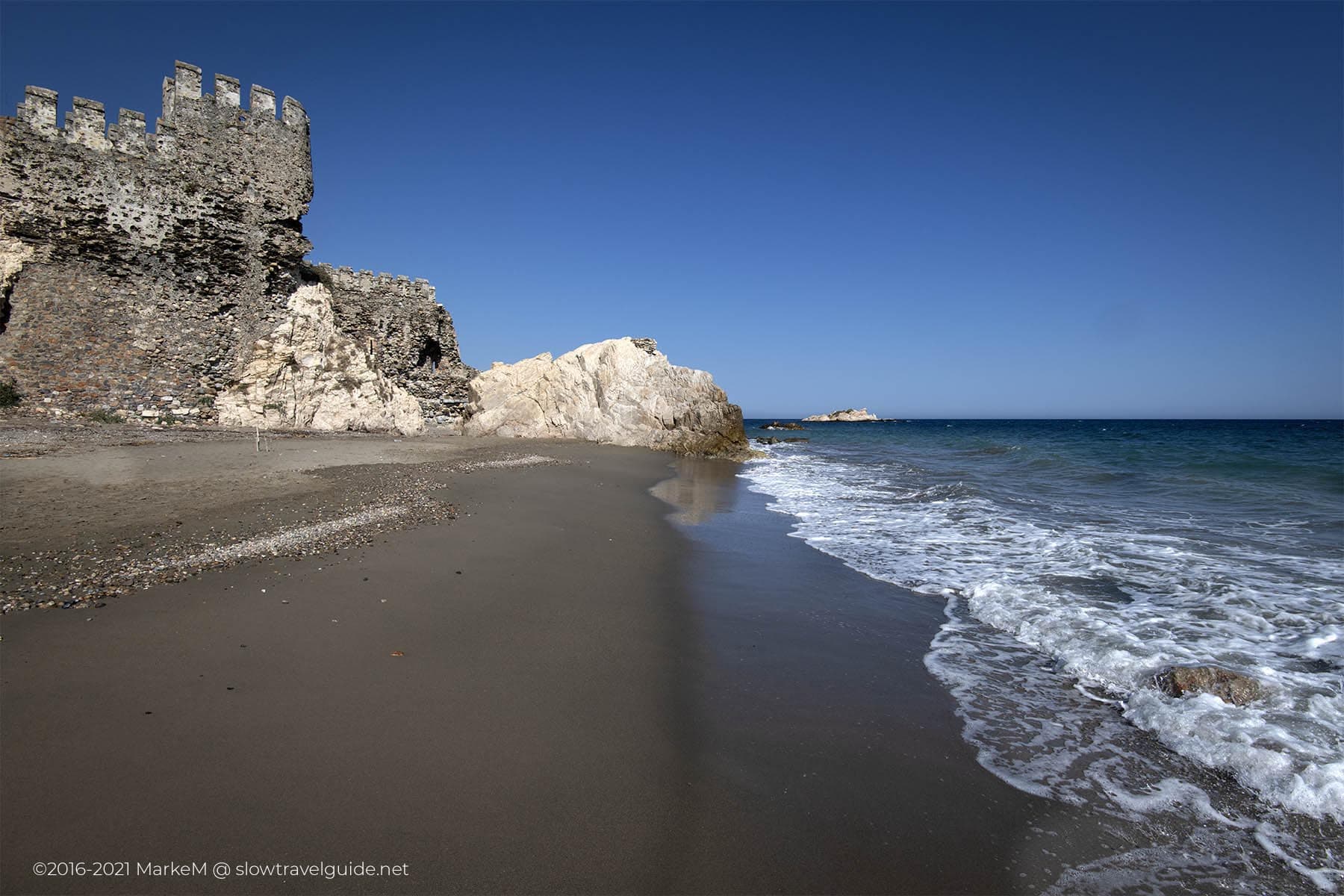
Mamure Castle
Not every castle is located on a mountain overlooking the area; some are strategically positioned near the sea. With its solid walls and towers immersed in the Mediterranean Sea, it looks like a difficult-to-conquer castle. (Read more)
Sedir Island
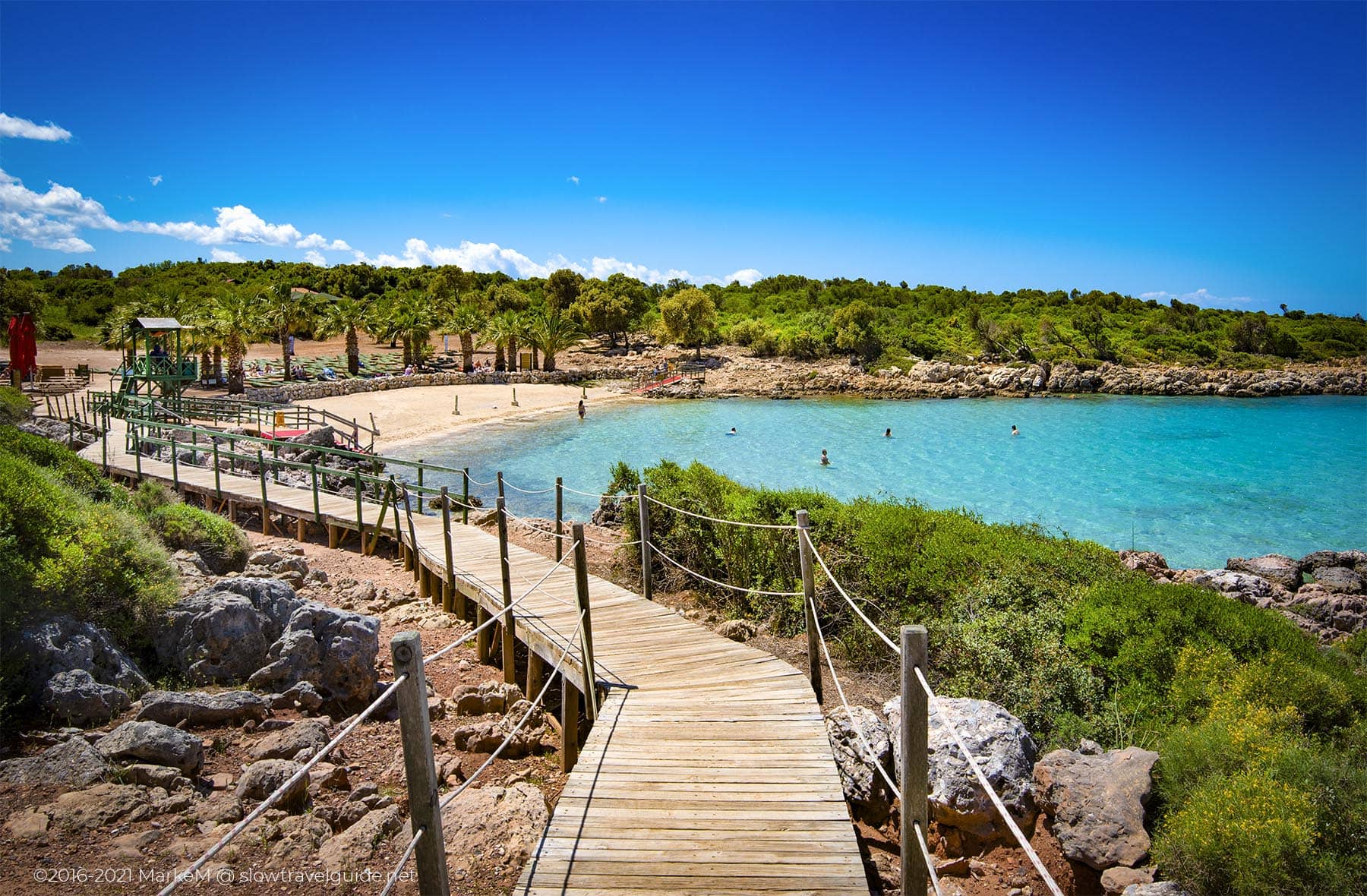
Sometimes culture and nature coexist. This is the case with Spider-Island, and a picturesque island tucked away in the Gökova Bay between Akyaka and Marmaris. (Coming soon)
© 2016-2022 All rights reserved by slowtravelguide.net.
The content of this website is copyright protected and the property of slowtravelguide.net.No part of this website may be reproduced in whole or in part in any manner without the written permission of the copyright owner.
Copyright ©2016-2022 Tüm hakları saklıdır. Bu (slowtravelguide.net.) web sitesinin içeriği koruma altındadır ve slowtravelguide.net.Buradaki hiçbir içerik (yazı,fotoğraf,video vb.) izinsiz olarak kopyalanamaz, alıntı yapılamaz,başka yerde yayınlanamaz.