
TEOS
By Slowtravelguide
TEOS: CENTURY-OLD OLIVE TREES, AN ANTIQUE HARBOR, AND DIONYSUS
When visiting the charming town of Sığacık, be sure not to miss Teos. Sığacık lies adjacent to this old port city, which is now an ancient site, and is just a short distance from Seferihisar. The Temple of Dionysus, the god of wine and many other pleasures, is located in Teos; enough to be, to put it mildly, intrigued.
Although the landscape is very open, the hundred-year-old olive trees offer enough shade and character to help you navigate the area. You can enjoy a sparkling cultural dip with your toes in the ocean by adding a charming beach with historic harbour walls and church ruins to the whole scene! Come have a self-guided tour of Teos with us while the heat is scorching.
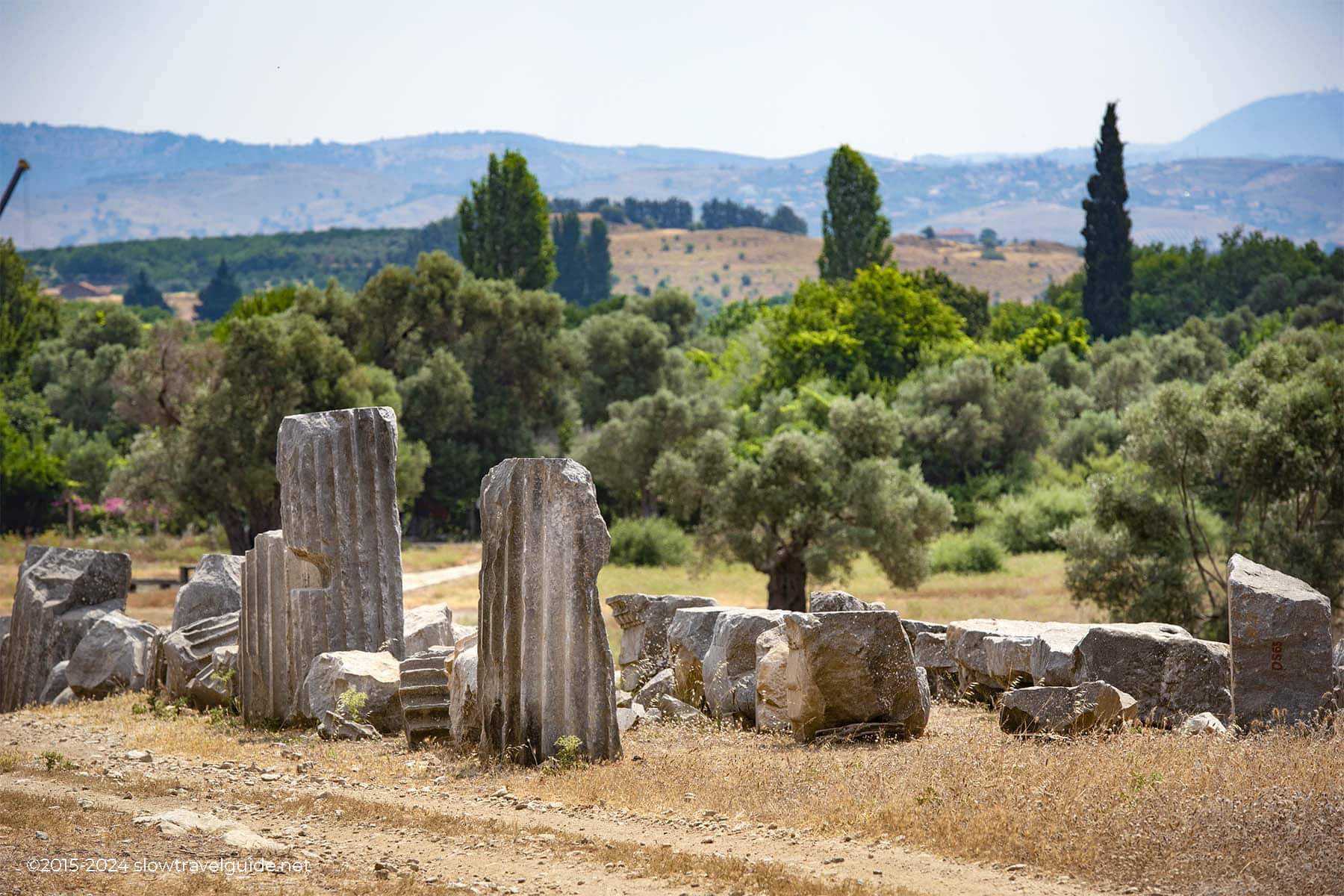
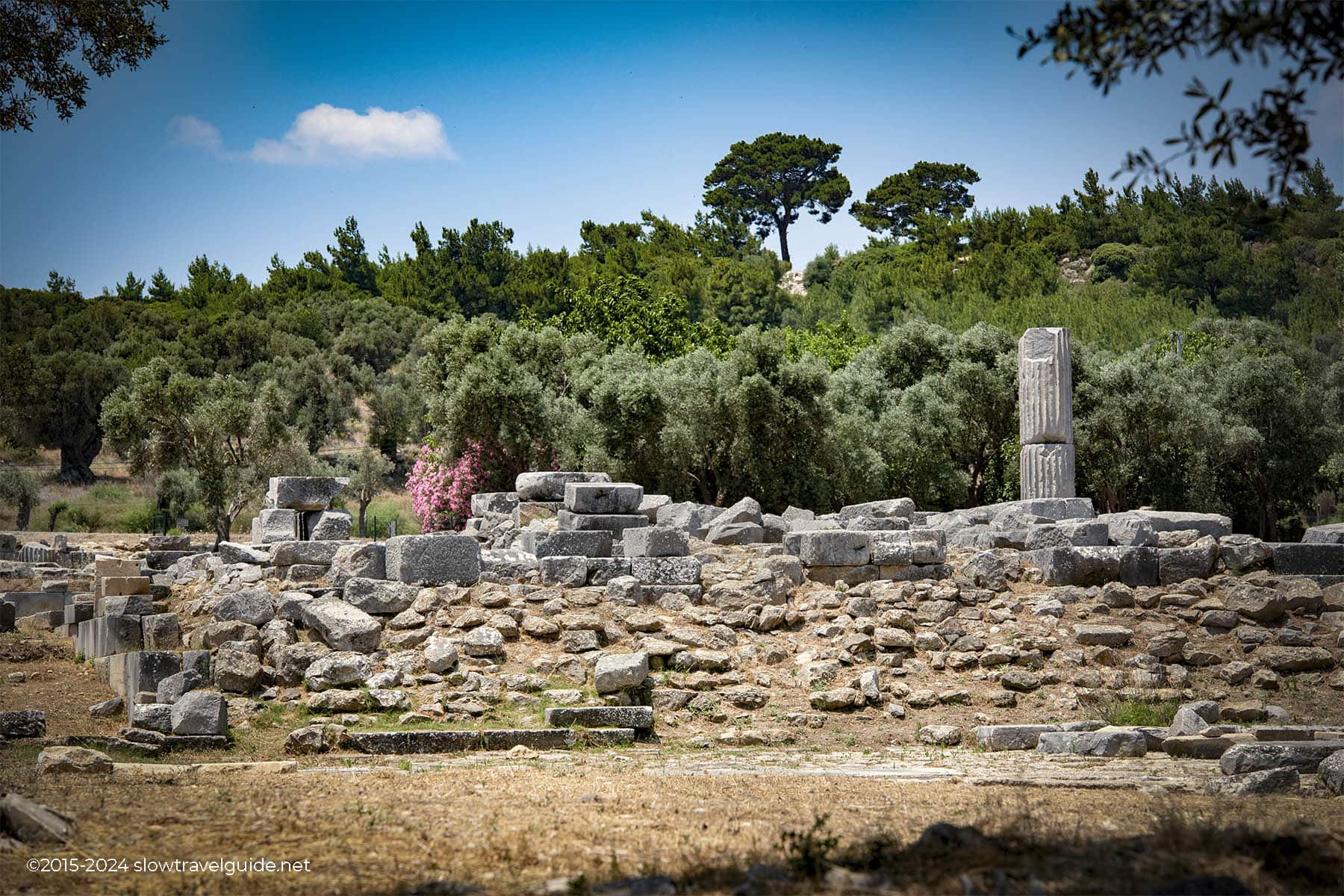
Bits And Pieces Of Dionysus’ Temple And A Lovely Countryside View In Teos
THE HISTORY OF TEOS
Around 1.080 BC, a general by the name of Athamas developed Teos. Teos was one of the twelve Ionian cities, and although Thales of Miletus had suggested in the year 600 BC that Teos should become the district centre due to its location, this suggestion was never carried out. Even yet, Teos and its two ports were significant due to its trading connections with Egypt. The Persians took Teos, but the residents who had fled to Thrace later came back to their dwellings.
Attalos I ruled the city when it was a part of the Pergamene Kingdom, and following his death, the city joined the Roman Empire.
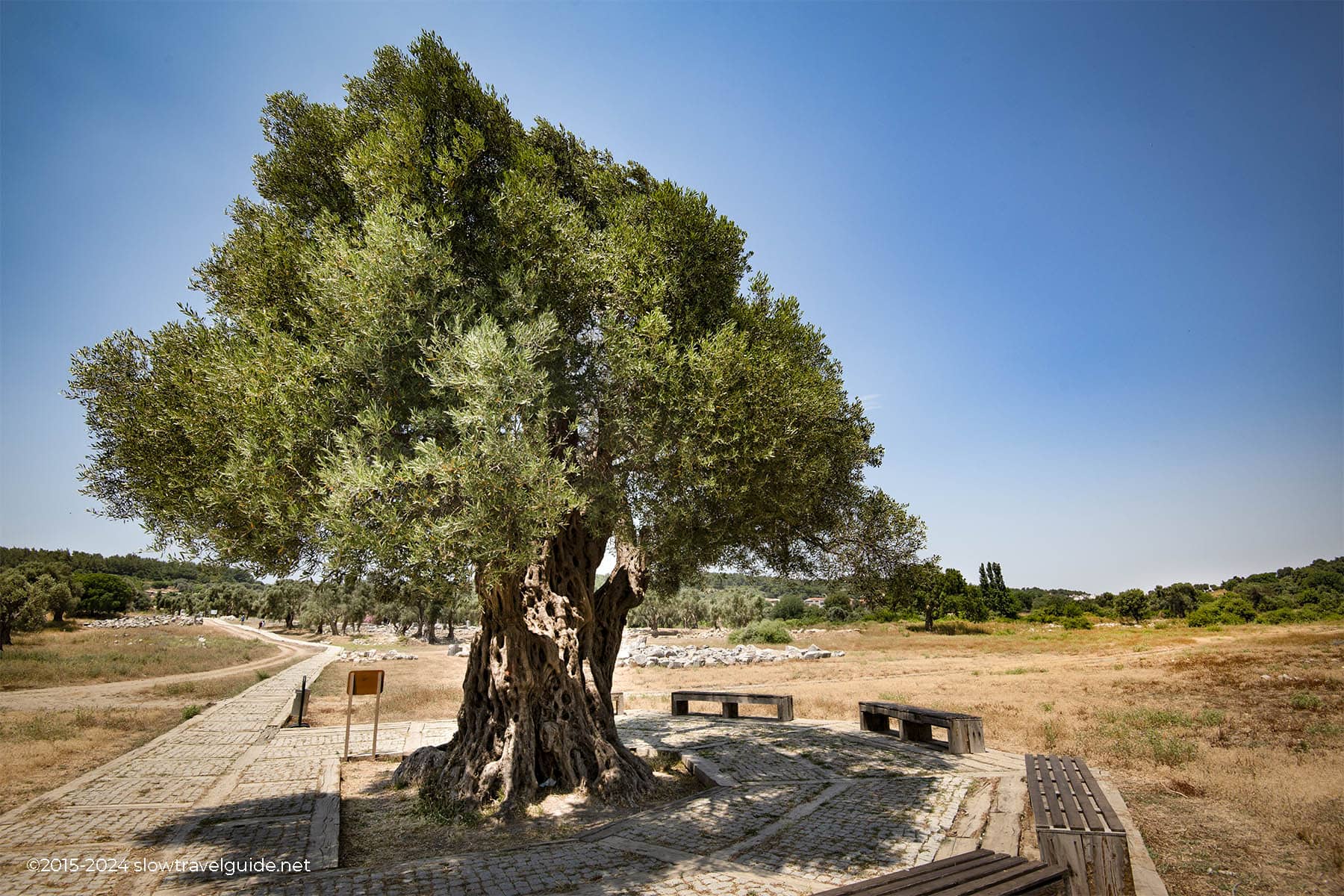
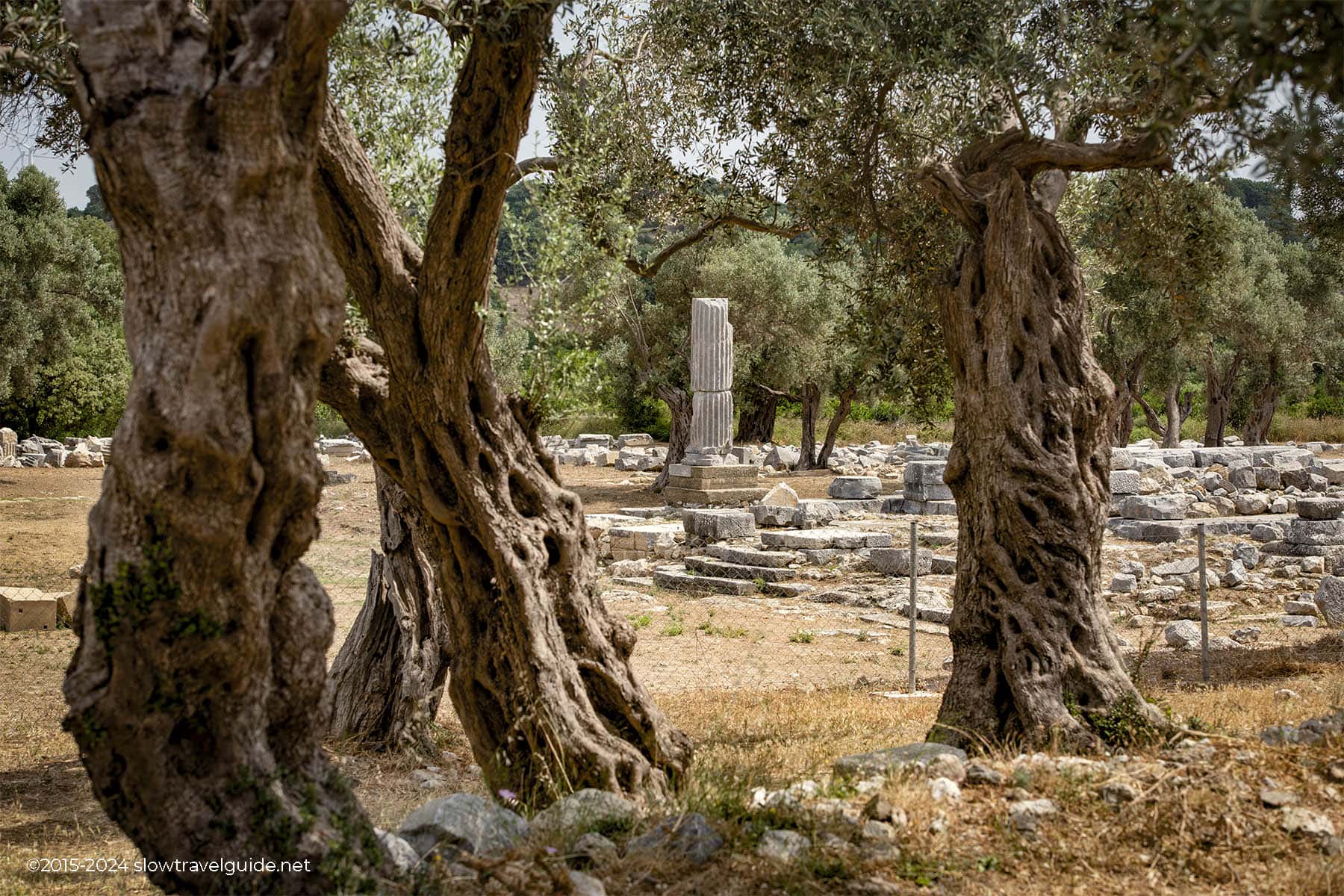
Another Impressive Olive Tree With The Temple Of Dionysus In The Background

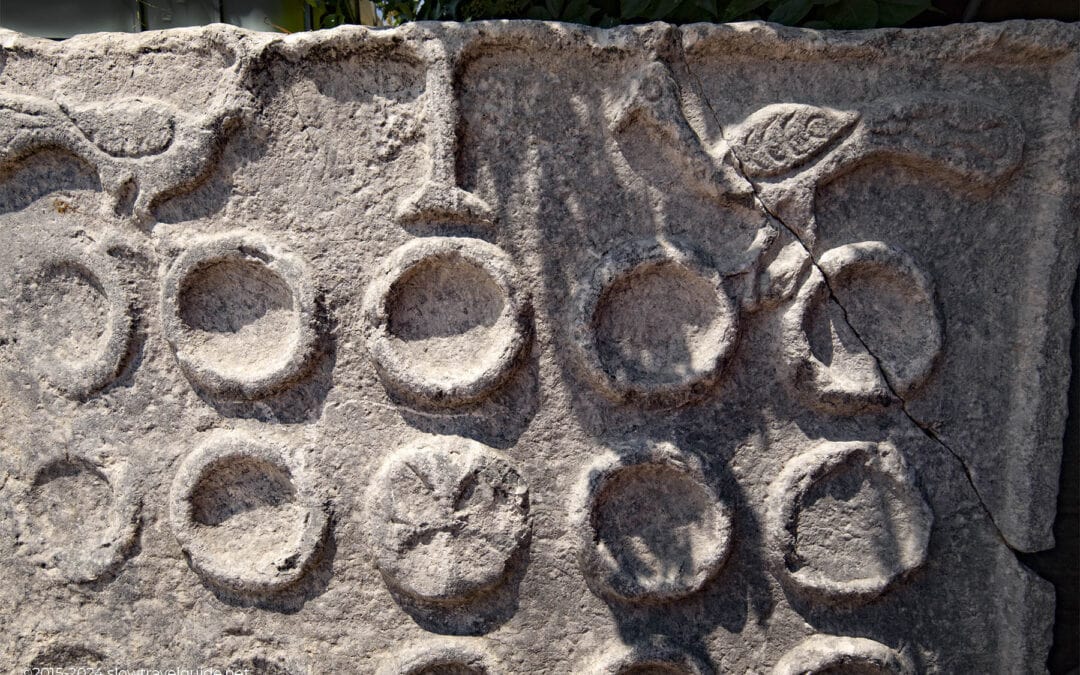
DIONYSUS: GOD OF WINE AND PRINCIPAL GOD OF TEOS
There are some Gods who sound more intriguing than others. That is, at least, how reading about Dionysus (or Dionysos) seems. We are discussing the Olympian God of wine, vegetation, pleasure, celebration, insanity, and ferocious hysteria, after all. Therefore, don’t hold it against us if we at least feel pity for this Zeus and Semele’s offspring. Because Dionysus was also the primary deity of Teos, the biggest Dionysus Temple in Anatolia is located here.
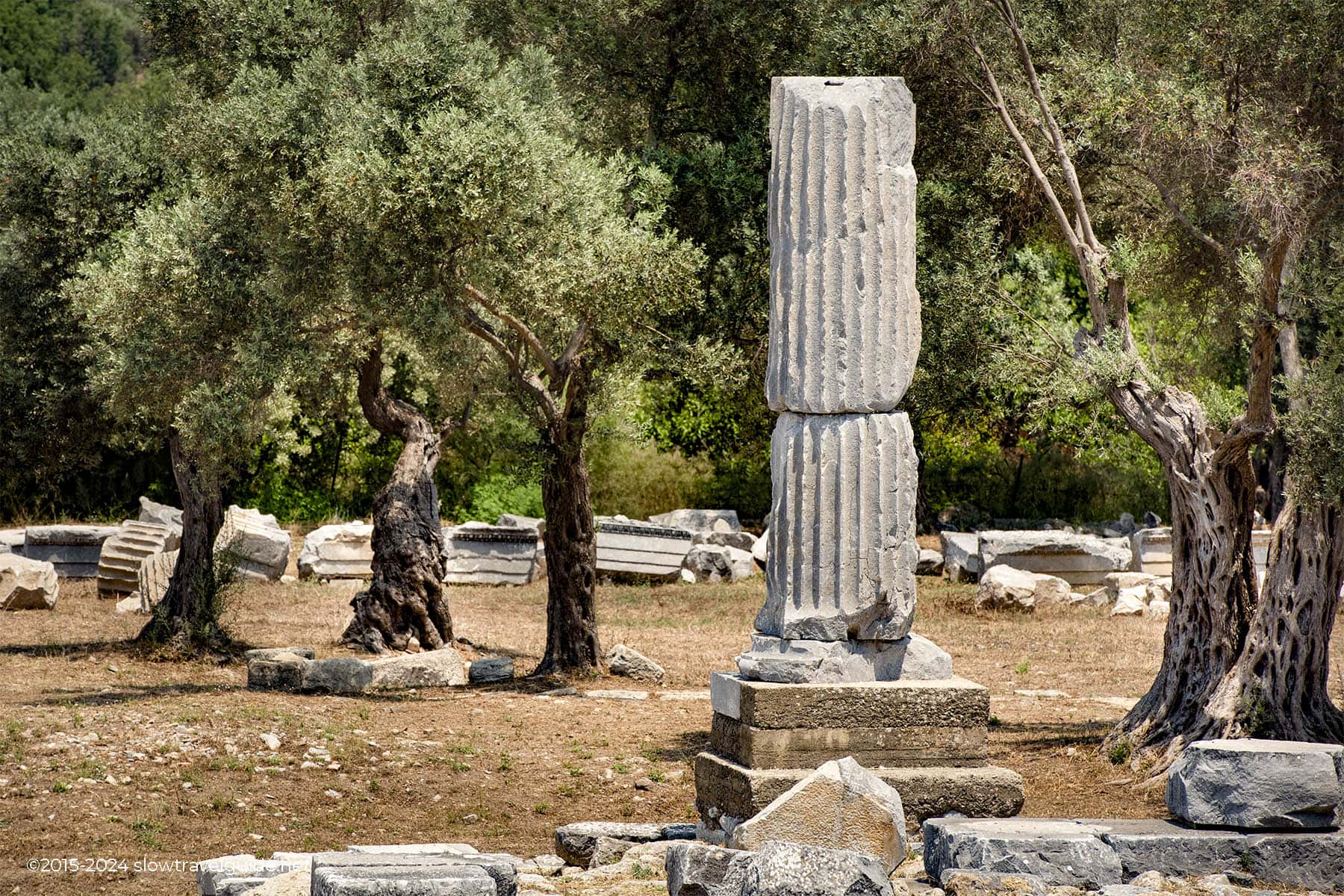
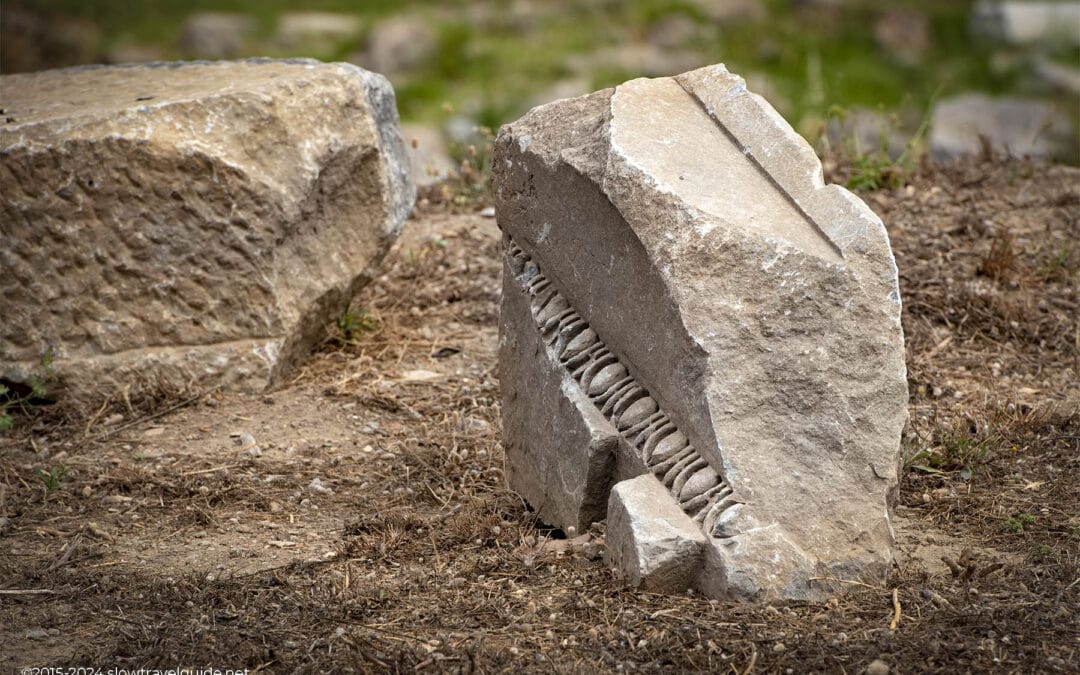
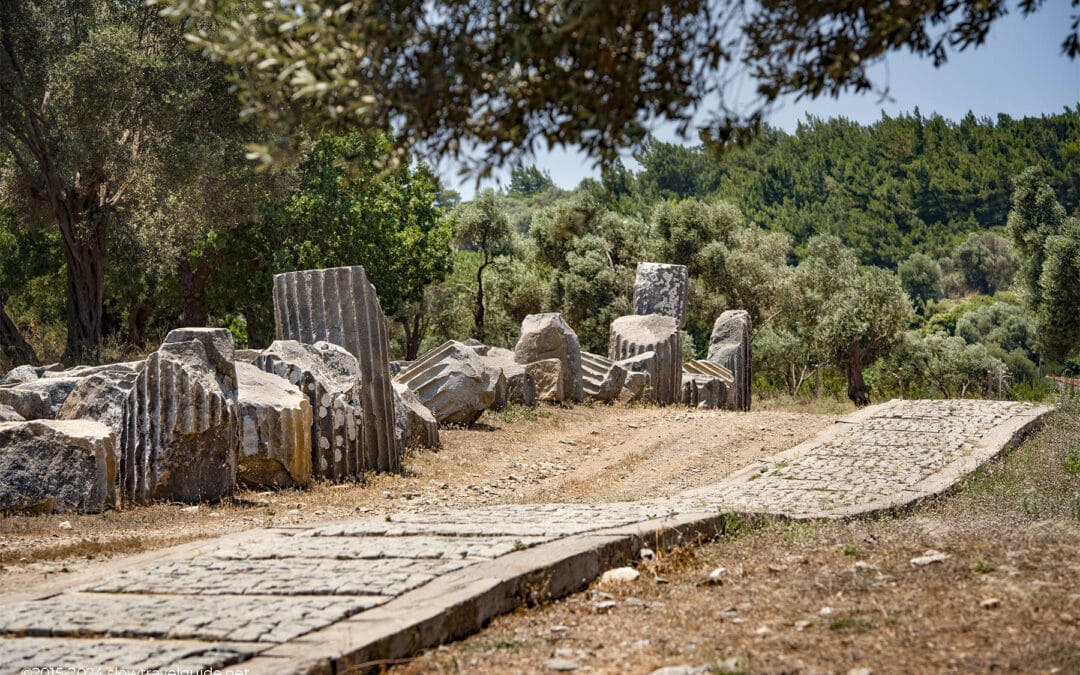
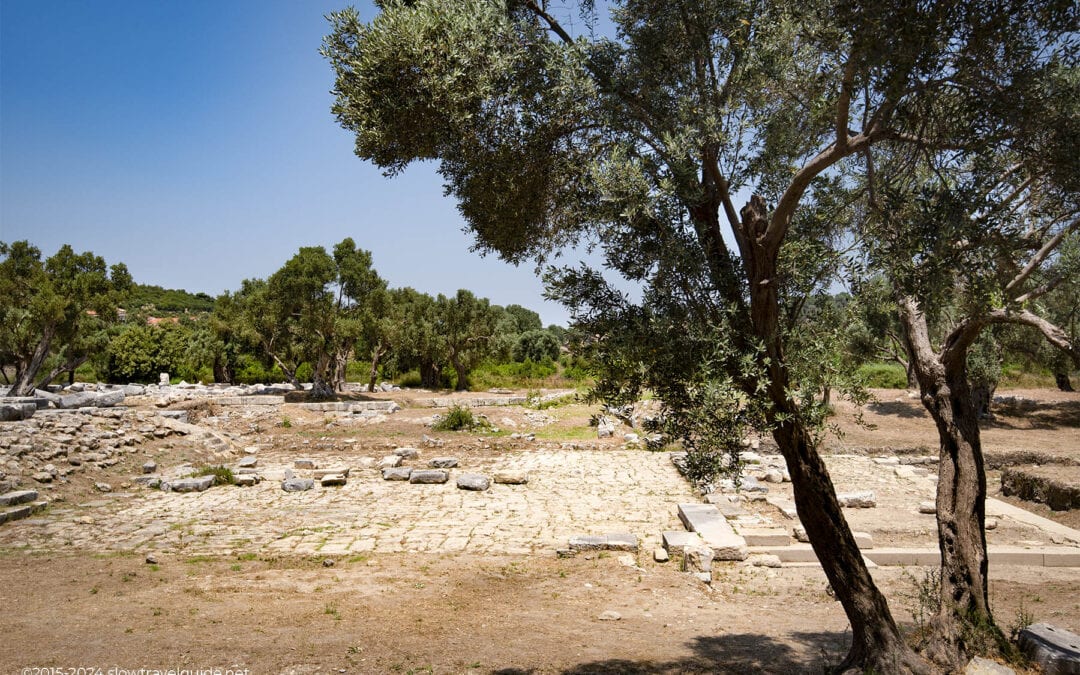
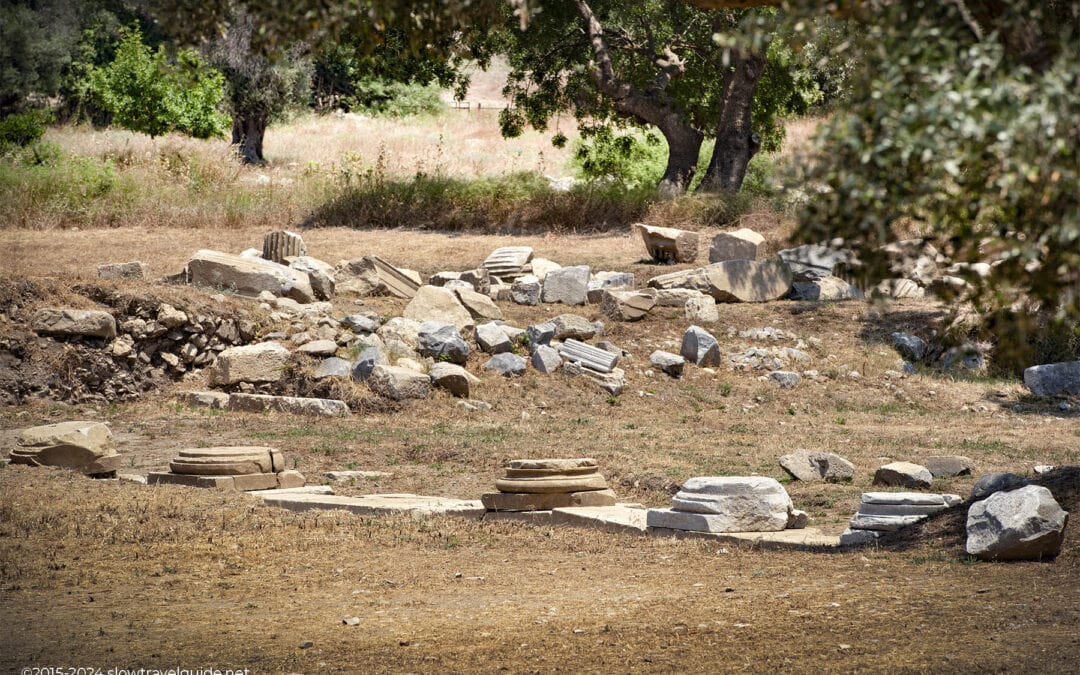
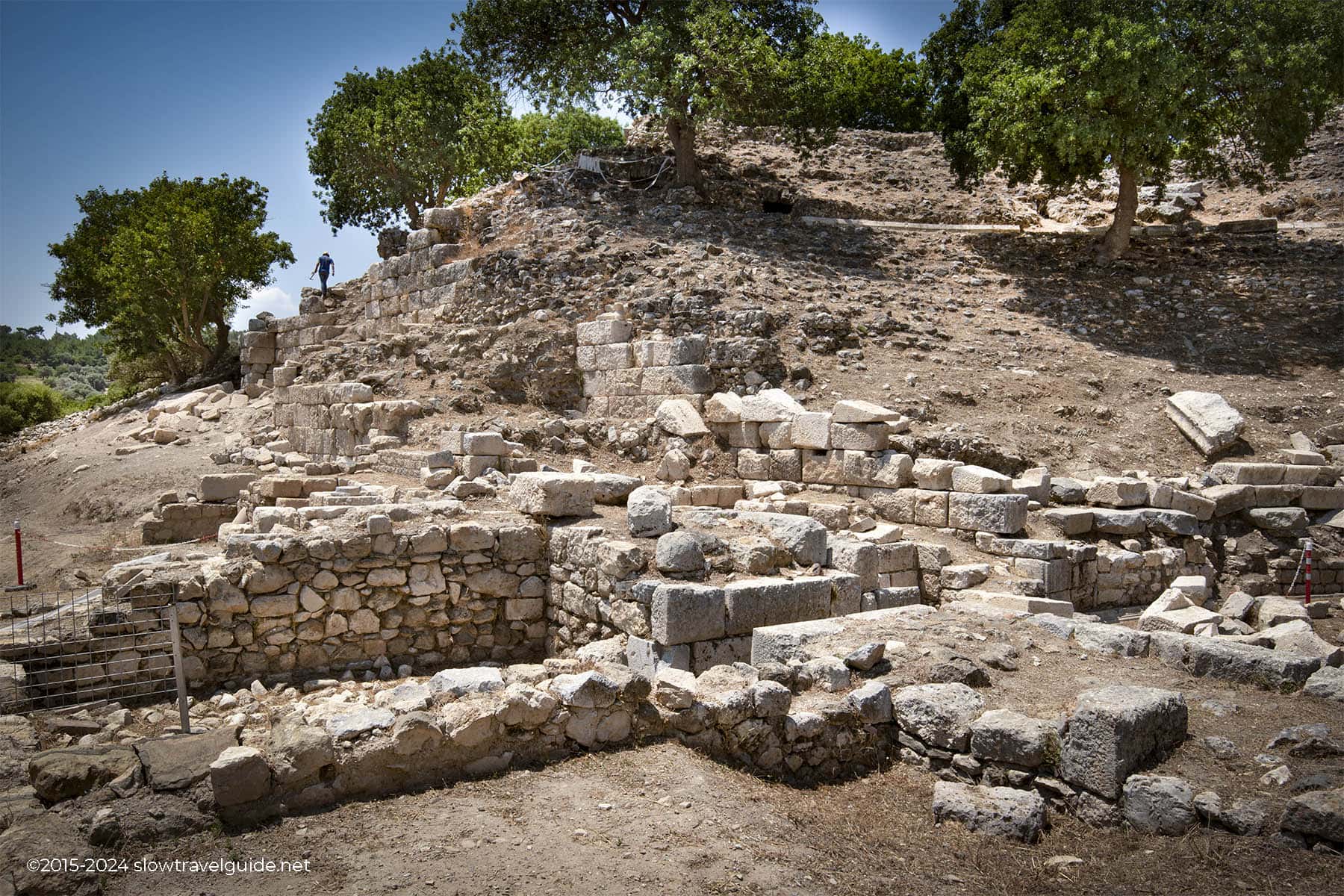
There is evidence that it was reconstructed multiple times, but the ensuing earthquakes continued to destroy it. Ionic stoae surrounded the peripteral temple of the Ionic order, with six columns on the short side and eleven on the long. The doric stoae surrounding the temple from the north and south. These days, not much remains of this magnificent structure, which was closely related to the Temple of Athena at Priene.


THE SOUTH PORT
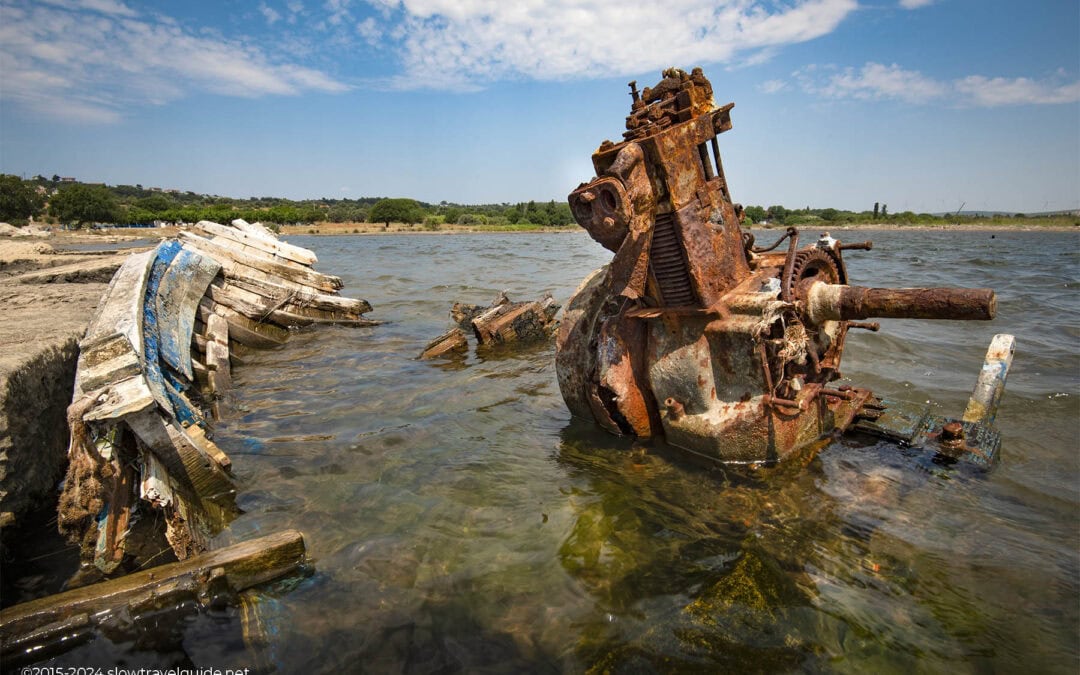
Sığacık’s port is currently the North Port of Teos. The South Port is regarded as one of the best preserved ancient ports in western Anatolia, with its antique relics still easily apparent. According to research, the pier had two walls and measured at least 153 metres in length. There were four spots where the wall broke, opening up to a dock to the north. There’s also an unearthed partially surviving platform of this quay next to the pier.
A tiny chapel or church with two aisles and two apses was found in 2011 next to the breakwater wall at the eastern end of the port. Coins and pottery from the 10th and 12th centuries BC have been discovered in the church. Teos’s two ports were vital to the city’s prosperity and its place in the Mediterranean and marine trade.


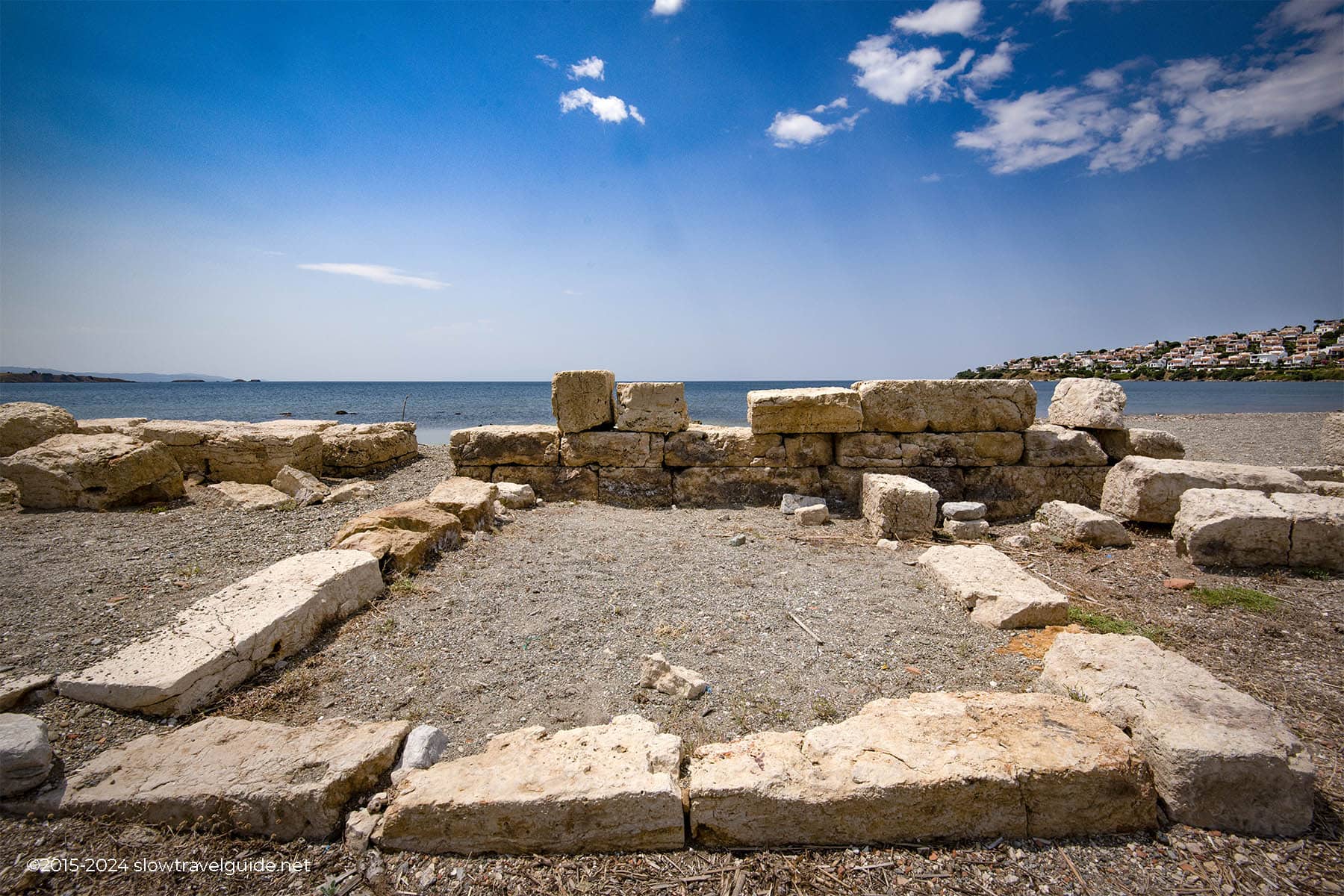
Chapel Ruins At Teos Harbor
A visit to Teos’ South Port comes with the perks of access to a lovely beach and bay. There is also a restaurant with a view and plenty of shade. In short, the perfect place for a break during your Teos visit!
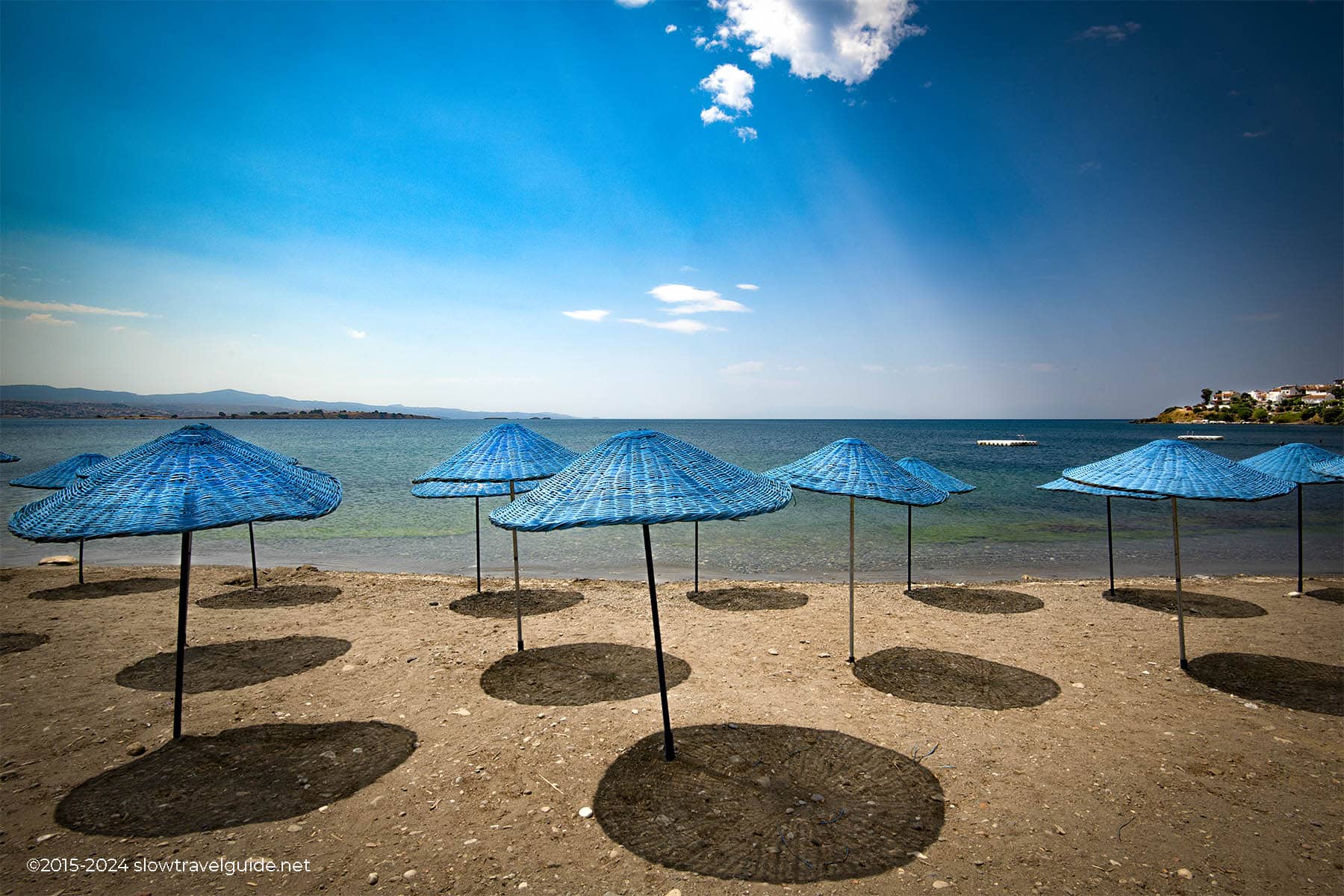
Fancy A Day At Teos Beach?


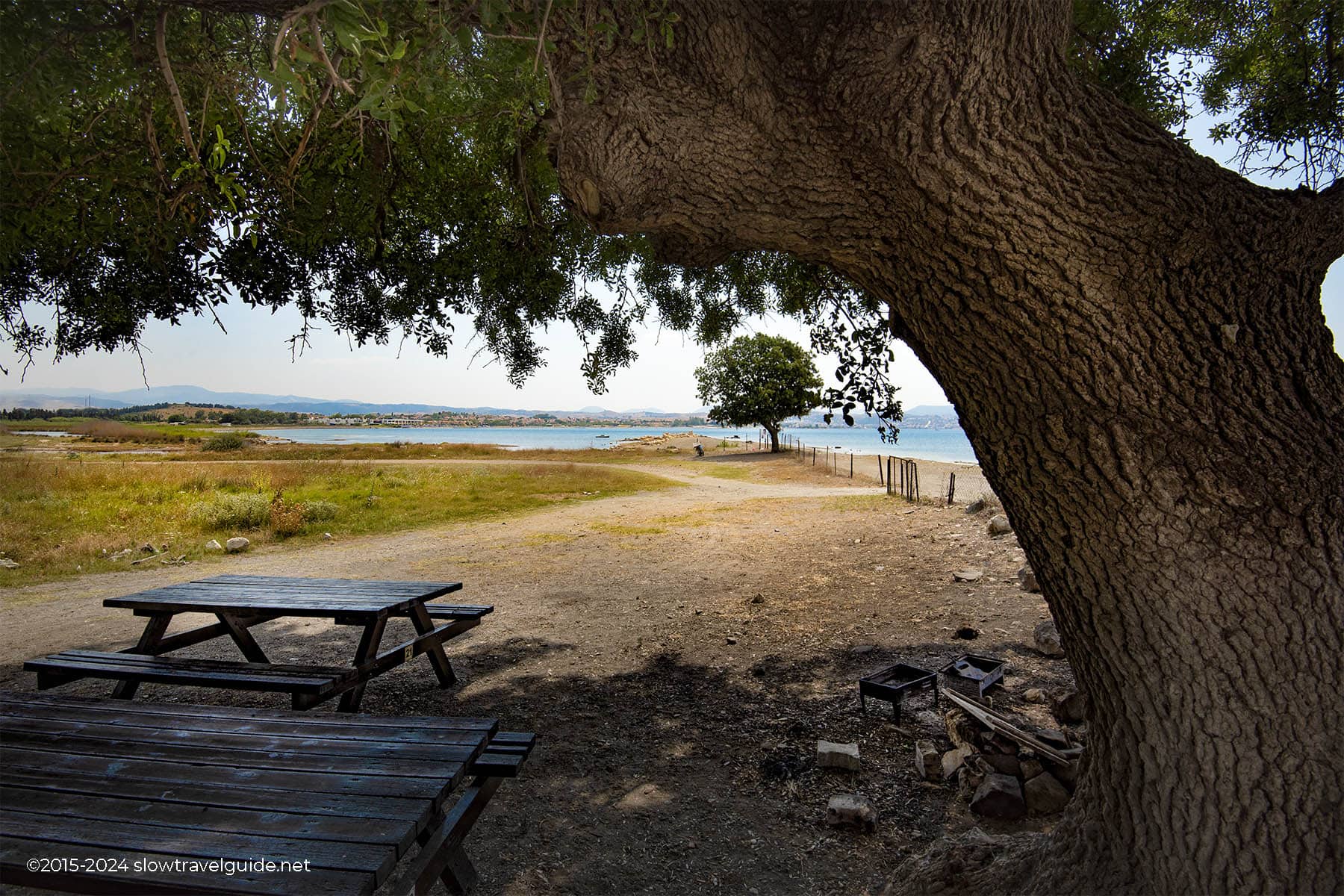
We Found Our Favorite Picnic Spot At Teos Harbor!
THE CISTERN
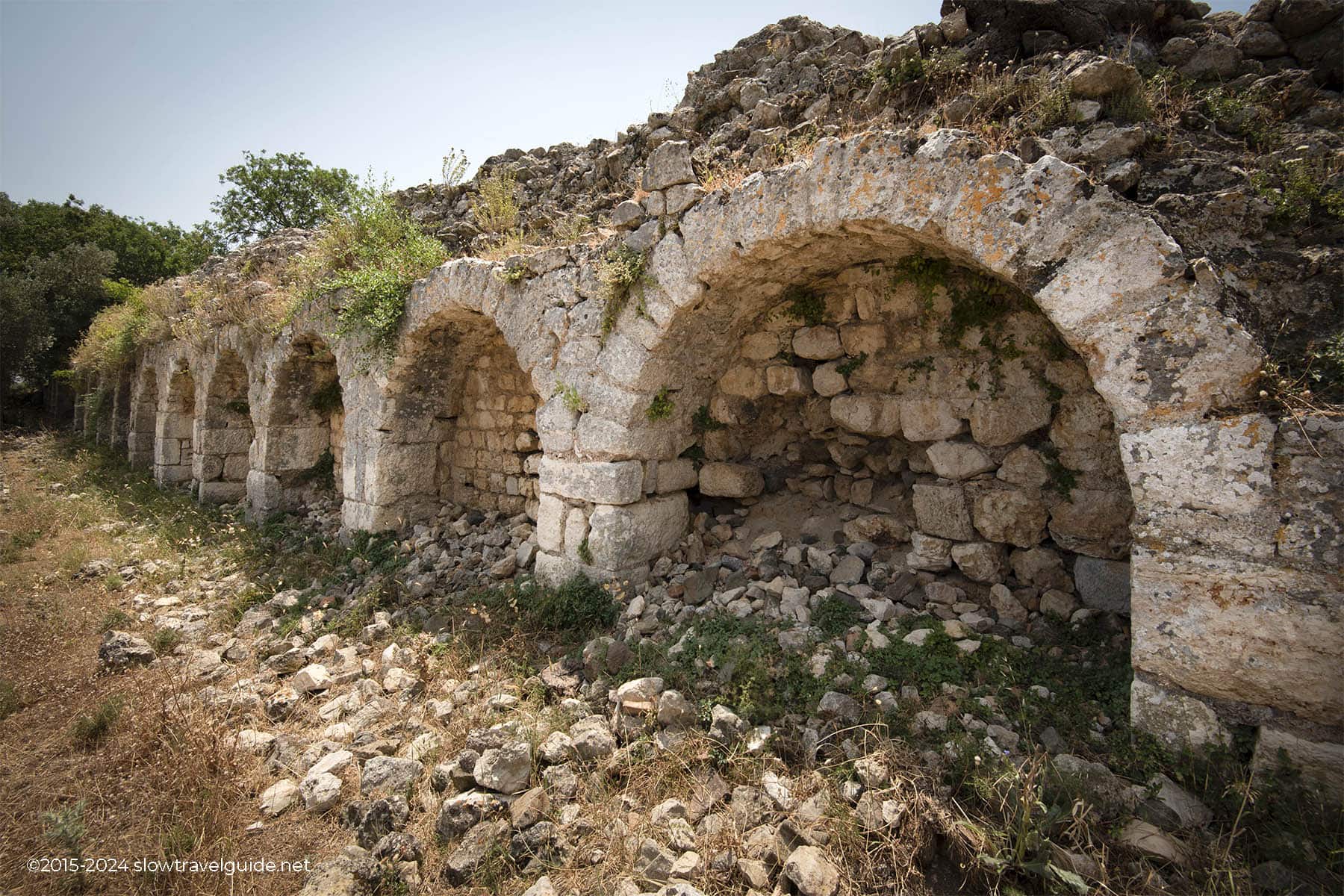
One of the most recognisable views of Teos is the Cistern, which is situated between the South Port and the Temple of Dionysus. The interior of the crumbling mortar structure, which had two blind arches and sixteen blind arches on one side, was plastered. Built during the Roman era, the rectangular construction is 45.5 m x 6.85 m x 5.42 m in size.
Most people agree that this well-preserved barrel-vaulted water reservoir acted as a cistern, while some people think it might have been a fountain building instead. The best place to take in the cistern’s magnificence is under the hundred-year-old olive tree nearby.
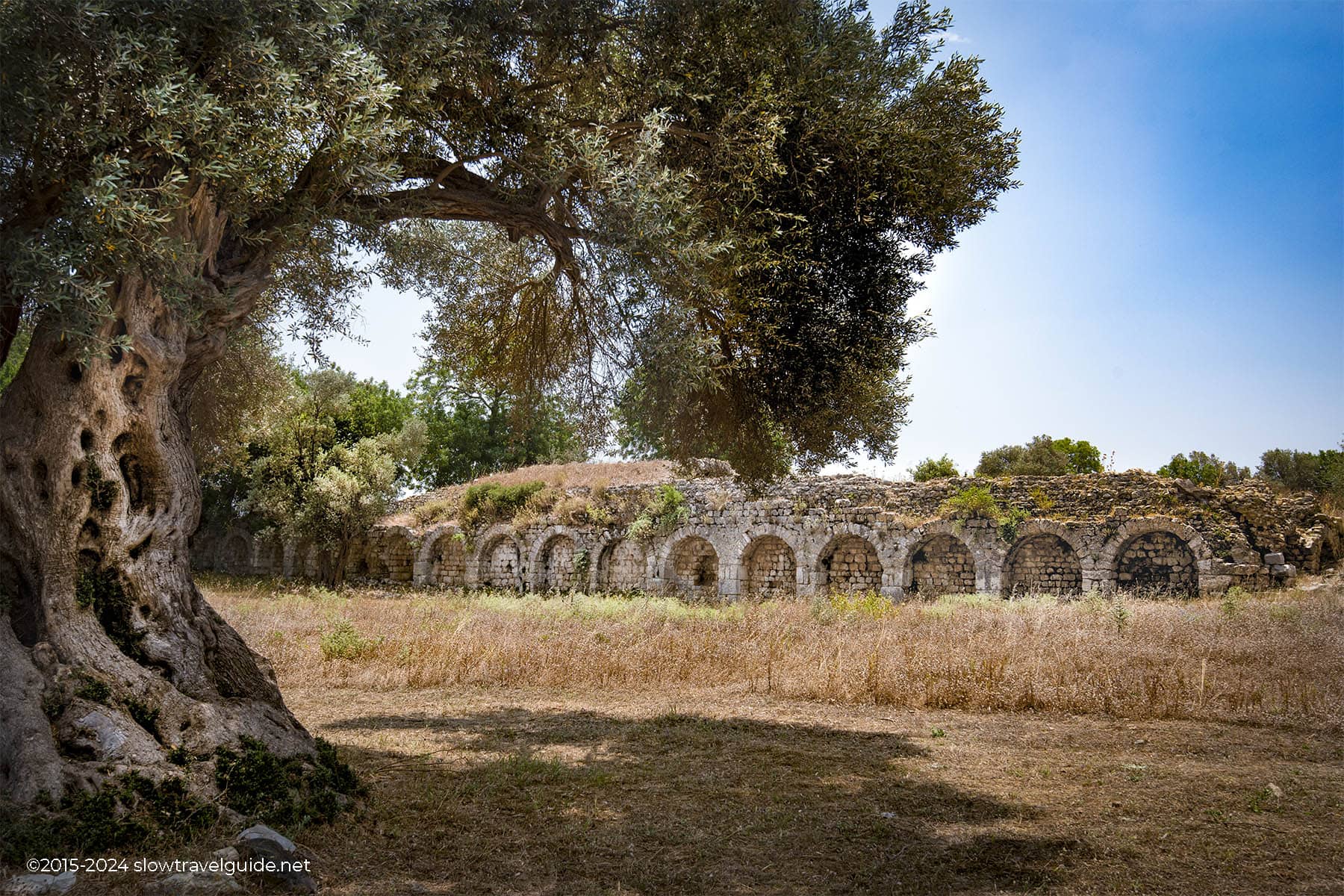
Teos’ Gorgeous Cistern And Equally Impressive Olive Tree


THE WELL-PRESERVED BOULEUTERION
Teos’s best-preserved structure is thought to be the Bouleuterion. The Bouleuterion, which had 16 rows and four sections, served as a venue for social and educational events in addition to political gatherings. Inscriptions indicating exams were held at the Bouleuterion were discovered by archaeologists. All you have to do to enjoy your visit is to just turn right at the sign for the Bouleuterion. Take the shorter path on the left, or the longer diversion on the right.
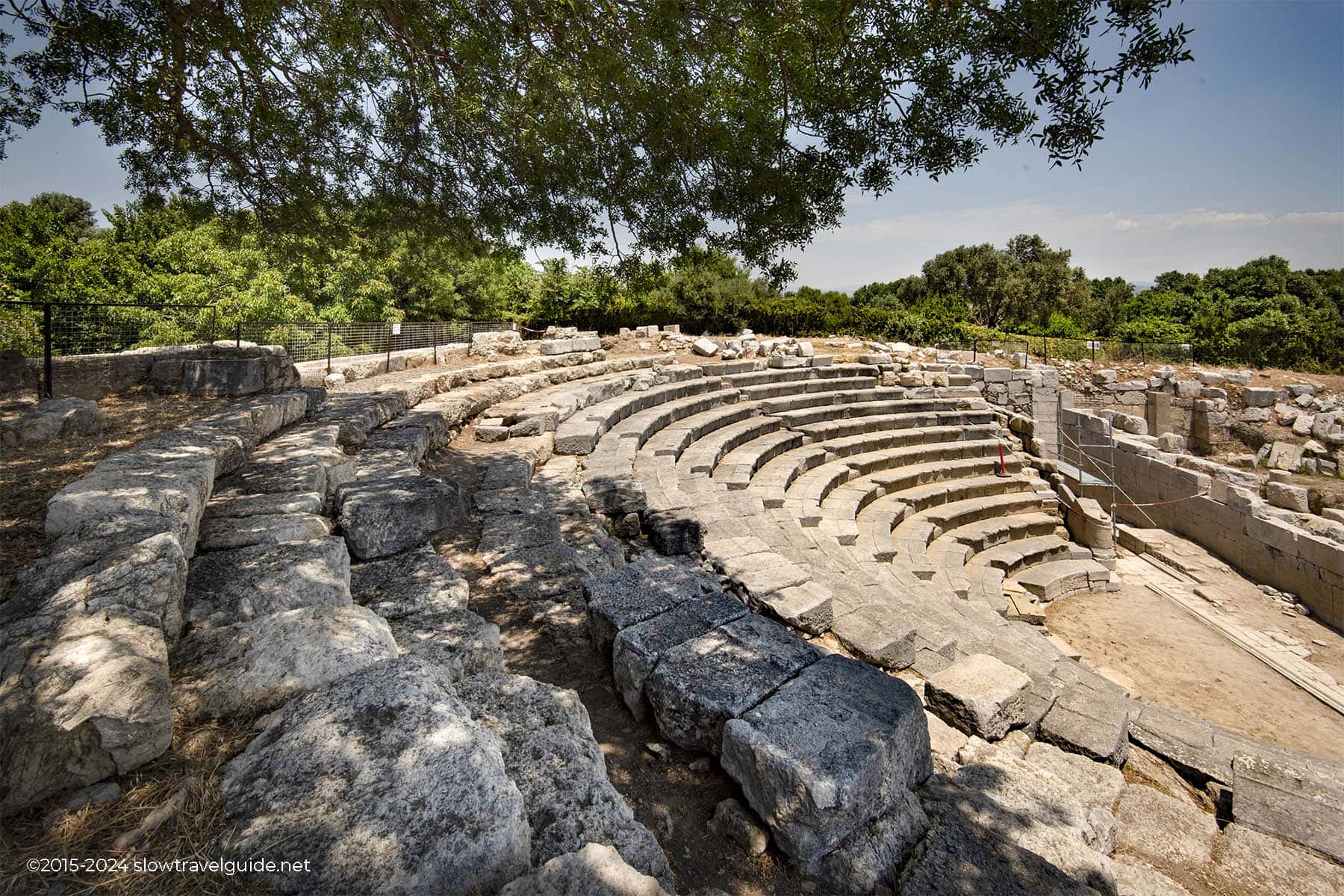
There Are Ongoing Restorations At The Bouleuterion
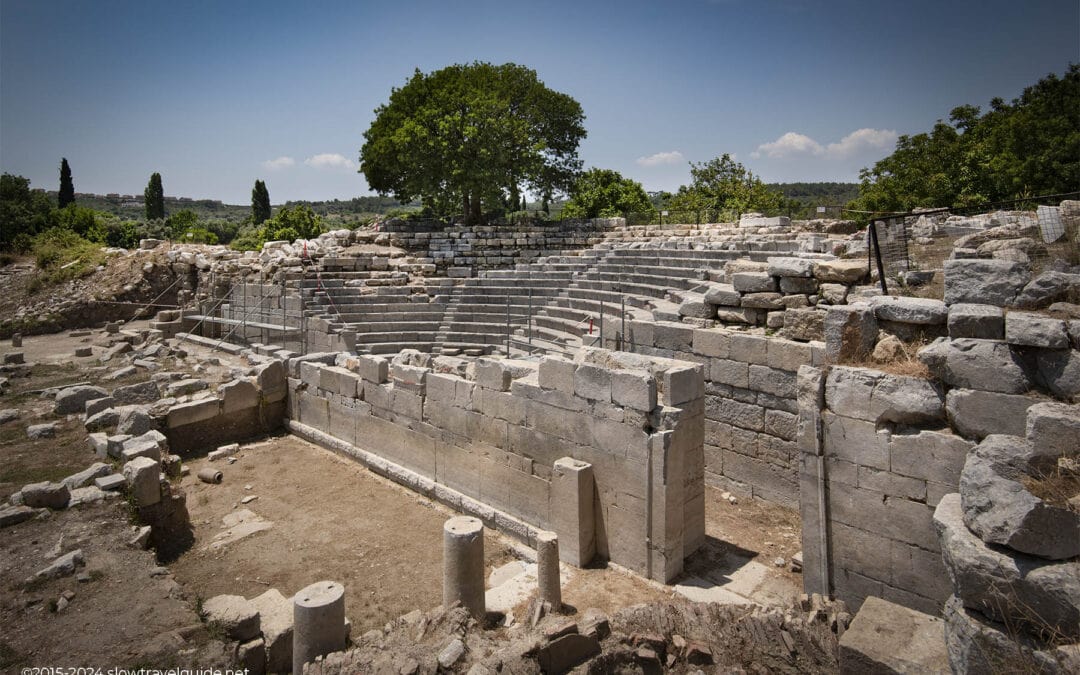


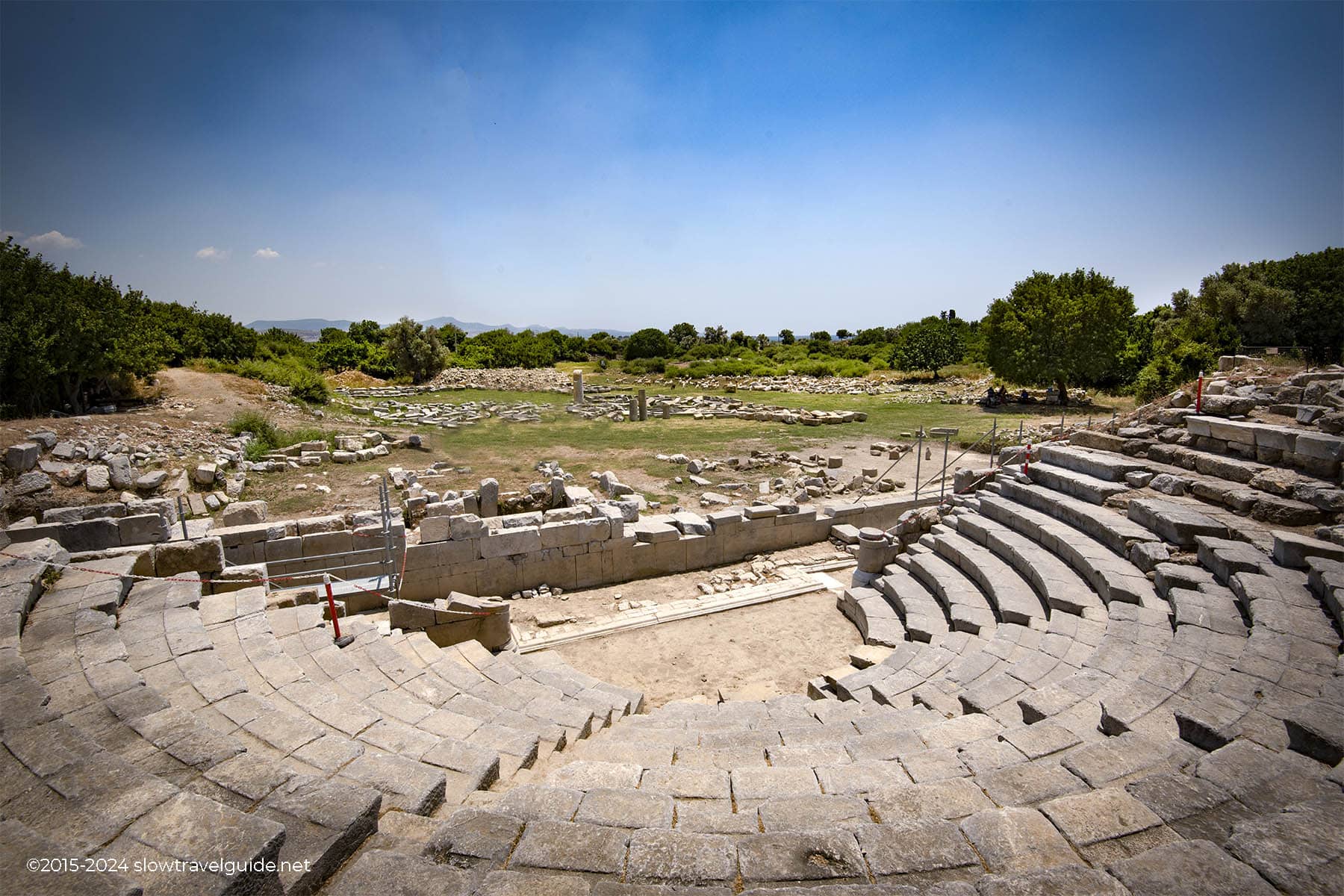
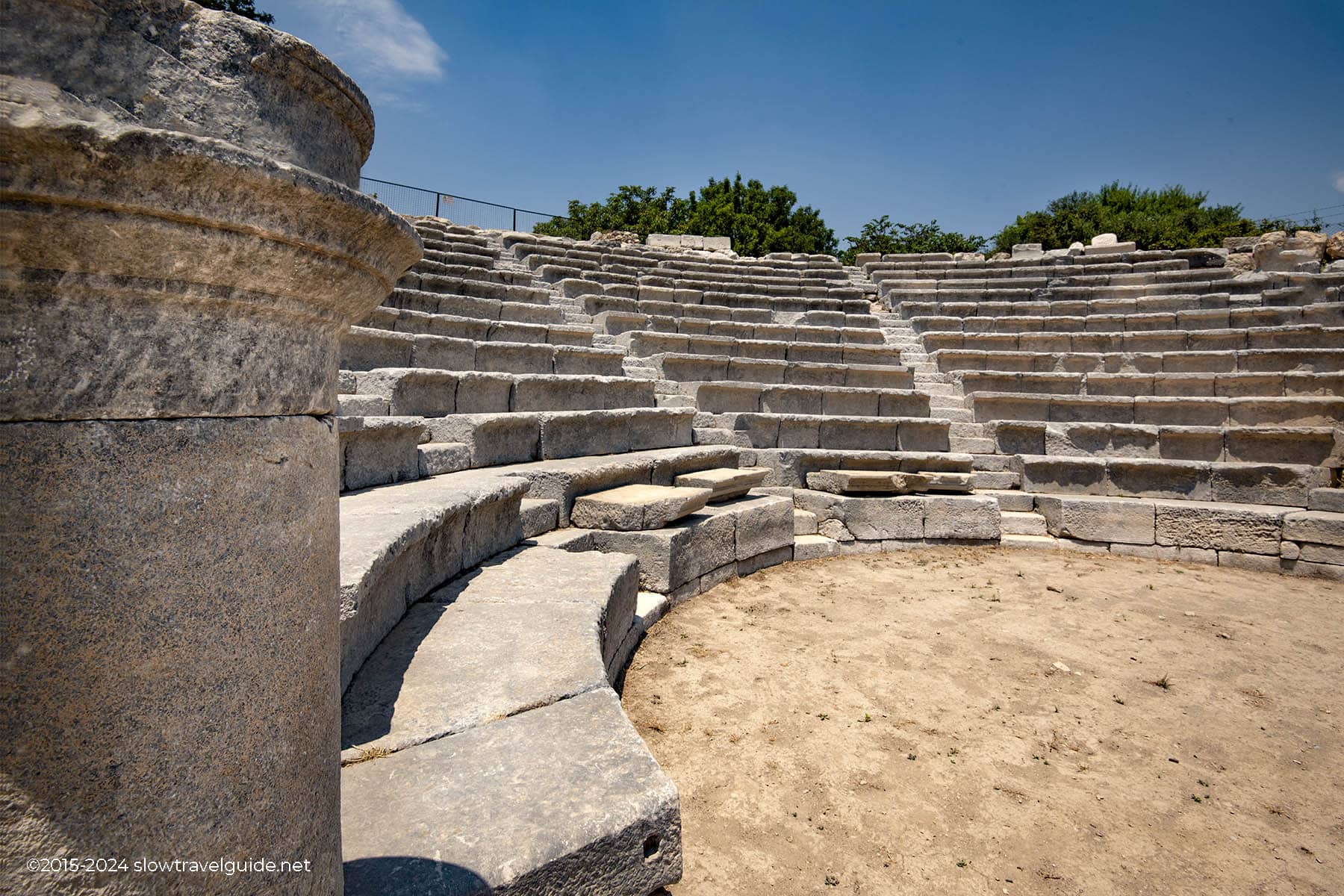
The Bouleuterion Is The Best Preserved Structure At Teos
THE THEATRE
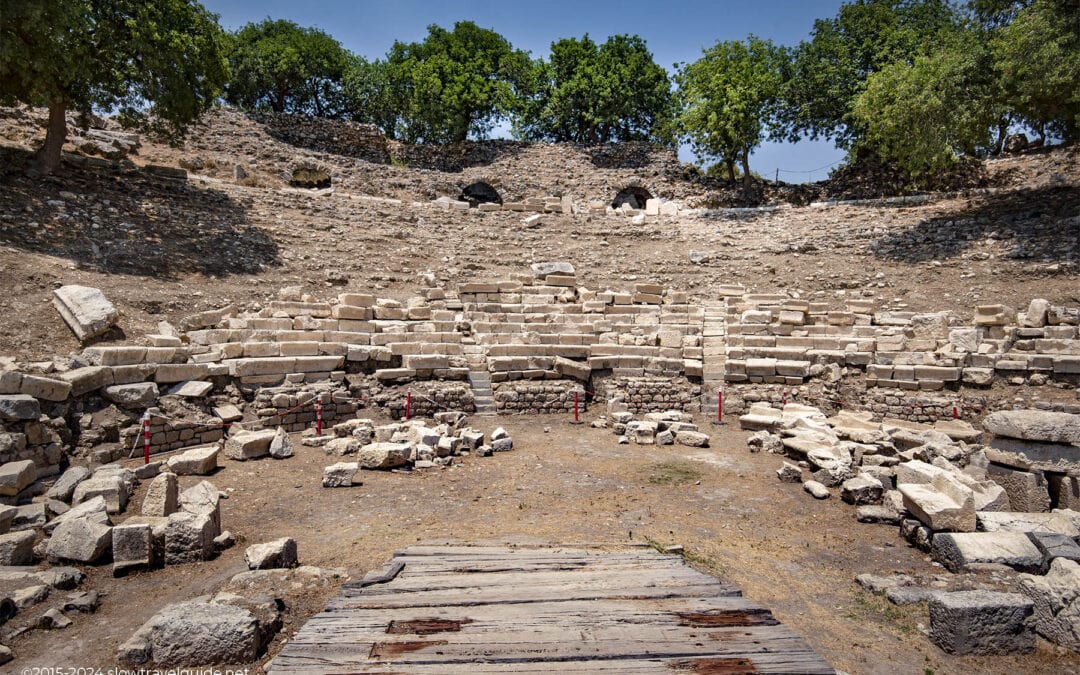
The theatre is built against a naturally occurring hill and has a still-visible arched and vaulted substructure. Although excavations have been going on since the 1960s, there are still a lot of areas of the Theatre that need to be uncovered. The building’s age is suggested by inscriptions found during those renovations, which date to the second century BC. The Theatre was accessible during our visit, however if you have mobility concerns, it is best viewed from a distance.

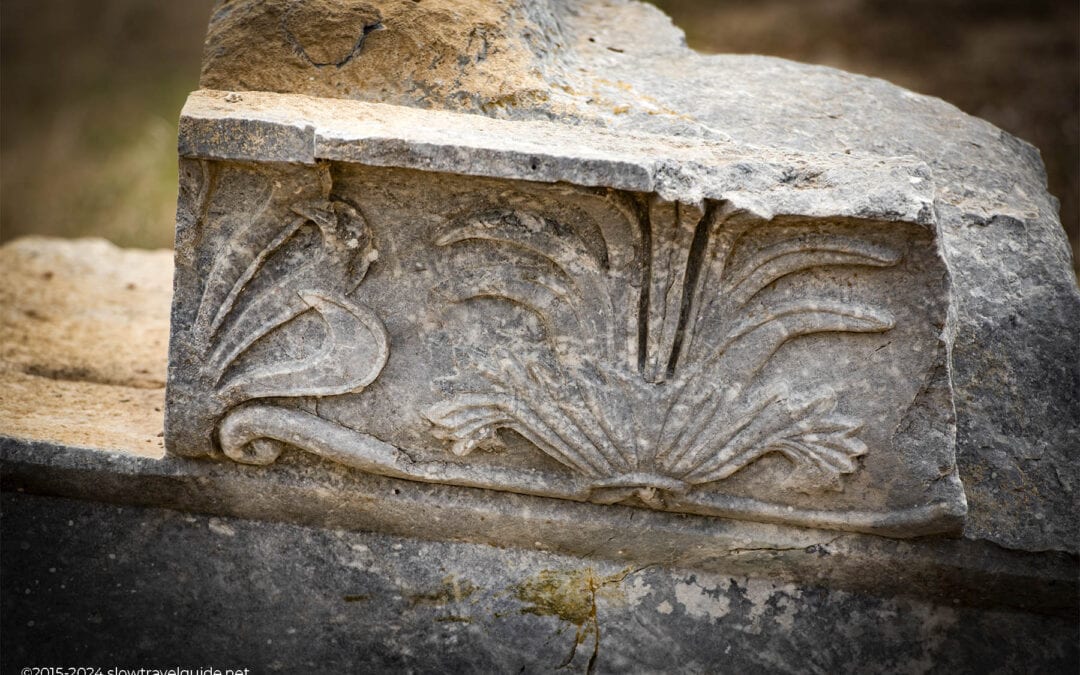
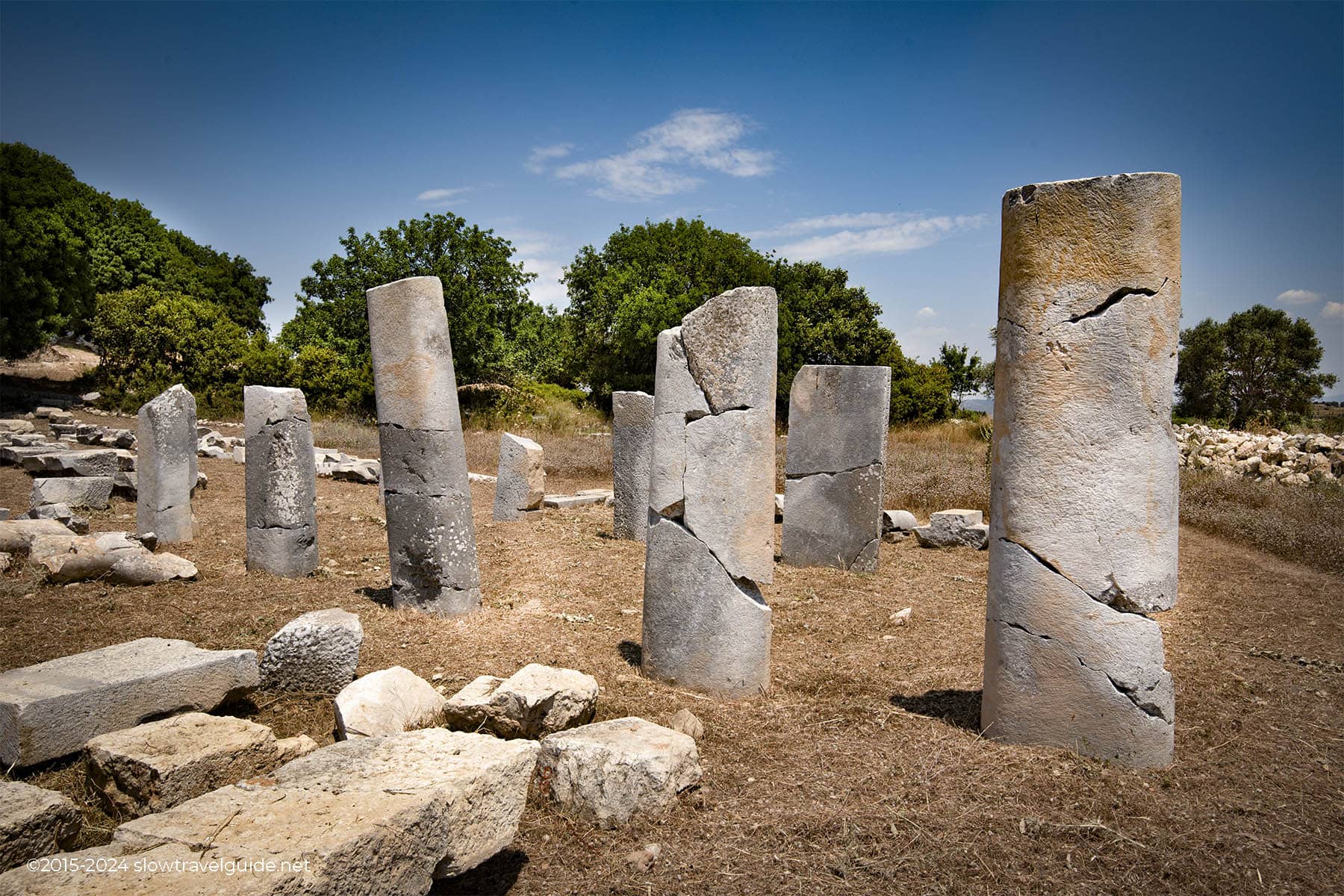
This Almost Looks Like Modern Art!
In conclusion, Teos is worth a visit, especially if you combine it with a day or two at Sığacık. This may not be the most spectacular ancient site in Turkey, but it has a great feel to it. The phenomenal olive trees, the beautiful ancient harbor, and the unearthed ruins have enough to offer to anyone interested in a cultural experience in nature. If you’re in the area, put it on your list.
To help you make the most out of your visit, we advise you to read and download this Teos Guide Book made by the Directory of Teos Excavations and the University of Ankara. Keep in mind:
© 2016-2022 All rights reserved by slowtravelguide.net.
The content of this website is copyright protected and the property of slowtravelguide.net.No part of this website may be reproduced in whole or in part in any manner without the written permission of the copyright owner.
Copyright ©2016-2022 Tüm hakları saklıdır. Bu (slowtravelguide.net.) web sitesinin içeriği koruma altındadır ve slowtravelguide.net.Buradaki hiçbir içerik (yazı,fotoğraf,video vb.) izinsiz olarak kopyalanamaz, alıntı yapılamaz,başka yerde yayınlanamaz.